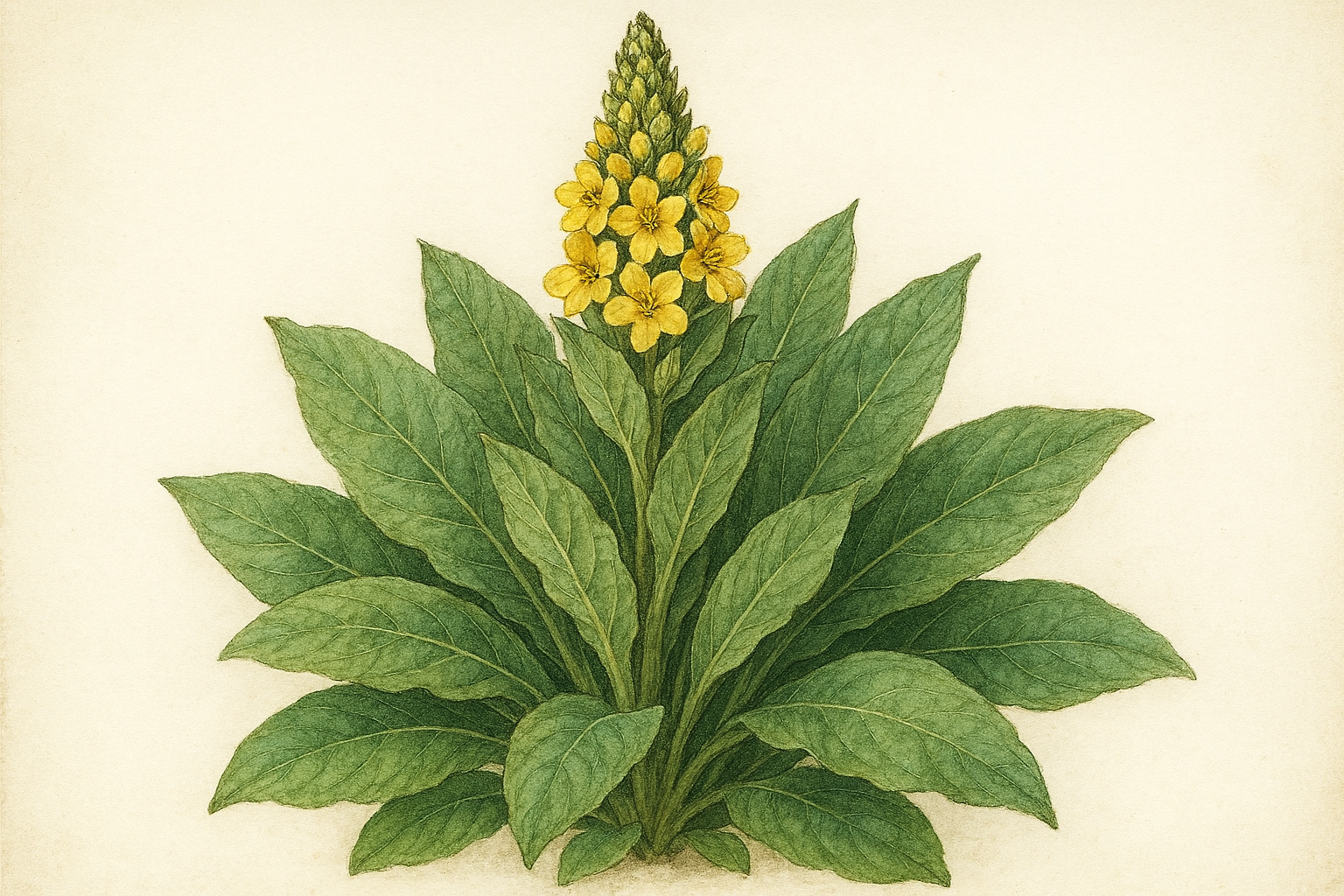
Mullein, scientifically known as Verbascum thapsus and a member of the Scrophulariaceae family, is a revered herb celebrated for its profound ability to soothe the respiratory system, ease pain, and promote lymphatic drainage. Known by evocative names such as Aaron’s Rod, Blanket Leaf, Candle-Wick, Flannel-Flower, Feltwort, Great Mullein, Hedge-Taper, Jacob’s Staff, Mullein Dock, Old Man’s Flannel, Shepherd’s Club, Velvet Dock, and Velvet Plant, this biennial plant is named for its soft, fuzzy leaves and tall, torch-like flower spikes that light up fields and roadsides. Its leaves, flowers, and roots, rich in mucilage, saponins, and flavonoids, offer demulcent, expectorant, and vulnerary properties. Used for centuries by Native Americans, medieval herbalists, and modern practitioners, Mullein is a cornerstone of herbal medicine for bronchitis, earaches, and swollen glands. In this comprehensive article, we’ll explore the multifaceted benefits of Mullein, its rich nutritional and bioactive profile, and how to safely incorporate it into your wellness routine.

A Velvety Beacon of Respiratory Relief
Mullein is a striking, statuesque plant that thrives in sunny, disturbed soils across Europe, North America, and Asia, its woolly leaves and golden flower spikes earning it names like Velvet Plant and Candle-Wick. Its common names reflect its appearance and uses: Aaron’s Rod and Jacob’s Staff evoke its tall, staff-like flower stalk, while Old Man’s Flannel describes its soft, flannel-like foliage. Native American tribes, such as the Cherokee and Iroquois, smoked Mullein leaves for lung ailments and applied its roots to wounds, while medieval herbalists like Culpeper praised it as a “sovereign remedy” for coughs and inflammations. In folklore, its stalks were dipped in tallow to serve as torches, symbolizing illumination and healing.
Mullein’s medicinal legacy centers on its ability to tone mucous membranes, clear respiratory congestion, and reduce lymphatic stagnation, making it a go-to remedy for conditions from asthma to ear infections. Its versatility extends beyond medicine—its leaves were used as shoe insoles for warmth, and its flowers dyed hair yellow. Today, Mullein is valued for its anti-asthmatic, anti-inflammatory, and sedative properties, offering relief from bronchitis, swollen glands, and chronic pain. Modern research highlights its efficacy in combating respiratory infections and reducing mucus buildup. Whether sipped as a soothing tea, smoked for lung relief, or applied as a healing oil, Mullein embodies a velvety blend of comfort, cleansing, and restoration, inviting us to harness its torch-like wisdom for respiratory, lymphatic, and nervous wellness.

Body Systems and Organs Supported by Mullein
Mullein’s therapeutic reach spans multiple body systems, making it a versatile ally for respiratory, nervous, circulatory, and lymphatic health. It supports:
- Respiratory: Clears lung congestion, soothes bronchial passages, and strengthens lung tissue.
- Nervous: Eases pain, promotes sleep, and calms spasms.
- Circulatory: Supports blood health and reduces inflammation in vessels.
- Lymphatic: Promotes drainage, relieving swollen glands and haemorrhoids.
Mullein primarily influences the lungs, while its actions target tissues like plasma, glands, blood, bone marrow, and nerves, making it an ideal remedy for respiratory infections, lymphatic congestion, and inflammatory pain.

Bioactive and Medicinal Power of Mullein
Mullein’s therapeutic potency stems from its rich array of bioactive compounds, including:
- Mucilage: A gel-like polysaccharide that soothes and protects mucous membranes, providing demulcent and emollient effects.
- Saponins: Enhance expectorant and anti-inflammatory actions, aiding mucus expulsion.
- Flavonoids: Hesperidin and verbaside, offering antioxidant and anti-inflammatory benefits.
- Aucubin: Provides antibacterial and anti-inflammatory properties.
- Volatile Oil (Trace): Contributes to its soothing and antiseptic effects.
These compounds drive Mullein’s extensive medicinal actions:
- Absorbent: Soothes and absorbs excess fluids in skin and lymphatic conditions.
- Anodyne: Relieves pain, including earaches, joint pain, and respiratory discomfort.
- Anti-asthmatic: Opens airways, easing asthma and bronchial constriction.
- Anti-catarrhal: Reduces excess mucus, clearing nasal and bronchial passages.
- Antiseptic and Germicide: Combats infections, particularly in the respiratory tract and ears.
- Anti-spasmodic: Relaxes bronchial and muscle spasms, easing coughs and cramps.
- Anti-tussive: Suppresses coughs, particularly dry or hacking ones.
- Astringent: Tightens tissues, aiding wound healing and reducing secretions.
- Demulcent: Coats and soothes irritated mucous membranes, relieving bronchitis and sore throats.
- Diuretic: Increases urine flow, supporting detoxification and fluid balance.
- Emollient: Softens and soothes skin, treating sores and sprains.
- Expectorant: Promotes mucus expulsion, clearing lungs in infections.
- Haemostatic: Controls bleeding, particularly from the lungs or bowels.
- Nutritive: Supplies essential nutrients, supporting overall vitality.
- Pectoral: Strengthens chest and lung health, aiding respiratory conditions.
- Vermicide: Expels intestinal worms, supporting digestive health.
- Vulnerary: Promotes healing of wounds, bruises, and burns.
- Sedative (Flowers): Calms the nervous system, inducing sleep and reducing tension.
- Anti-inflammatory (Flowers): Reduces inflammation in respiratory and ear tissues.
- Anti-bacterial (Flowers): Fights bacterial infections, particularly in ears and lungs.
These actions make Mullein a powerful remedy for respiratory ailments, lymphatic congestion, pain, and infections, with a soothing, nutrient-rich profile ideal for both acute and chronic conditions.

Nutritional Profile
Mullein is a nutrient-dense herb, providing a robust array of vitamins and minerals that enhance its nutritive and tonic properties:
- Vitamins:
- Vitamin A: Supports vision, skin health, and immunity.
- Vitamin D: Promotes bone health and immune function.
- B Complex: Enhances nerve function, energy metabolism, and stress resilience.
- Minerals:
- Iron: Supports oxygen transport and energy production.
- Magnesium: Enhances nerve and muscle function, reducing spasms.
- Potassium: Maintains fluid balance and supports heart health.
- Sulphur: Promotes skin health and detoxification.
Its nutrient profile, combined with its high mucilage content, makes Mullein an excellent choice for respiratory, lymphatic, and systemic health, supporting recovery and vitality.

Traditional and Modern Applications
Mullein has been a staple in Native American, European, and modern herbalism, with applications divided into internal and external uses:
Internal Applications
- Respiratory Health: Mullein’s demulcent, expectorant, and anti-tussive properties make it a premier remedy for bronchitis, whooping cough, sinusitis, colds, flu, and asthma. It tones mucous membranes, reduces inflammation, and clears mucus, while its anti-viral and anti-bacterial properties prevent complications like pneumonia. An infusion or tincture is ideal for lung ailments, and smoking Mullein soothes irritated lungs.
- Lymphatic Support: Its absorbent and diuretic actions relieve lymphatic congestion, easing swollen glands, earaches, toothaches, and haemorrhoids. It promotes fluid absorption and reduces morbid accumulations.
- Digestive Health: Its demulcent and astringent properties slow diarrhea, balance bowel function, and remove hardened mucus, improving nutrient assimilation and easing constipation.
- Nervous System Support: Its anodyne and sedative (flower) properties relieve pain, reduce spasms, and induce sleep, addressing cramps, insomnia, and chronic lung pain.
- Circulatory Health: Its haemostatic action controls bleeding from the lungs or bowels, while its anti-inflammatory effects support vascular health.
- General Health: Its nutritive and pectoral properties strengthen the lungs and body, supporting recovery from illness and environmental pollutant exposure.
External Applications
- Ear Health: Mullein flower oil (macerated in olive or almond oil, often with garlic) relieves earaches, suppuration, and inflammation, with 2–3 drops applied to the ear canal. Its anti-bacterial and anti-inflammatory properties reduce infection risk.
- Skin and Joint Healing: A poultice or oil treats sprains, bruises, sores, swollen glands, aching joints, and skin diseases, leveraging its emollient, vulnerary, and anti-inflammatory properties.
- Smoking Blend: Smoking Mullein leaves (alone or with Coltsfoot, Yerba Santa, and Lobelia—excluding Lobelia in the UK) soothes lungs, reduces cigarette cravings, and relieves chronic respiratory pain.
- Eye Inflammation: A cooled infusion soothes conjunctivitis and other eye inflammations, reducing redness and discomfort.

Dosage and Preparation
Mullein can be prepared as an infusion, tincture, powder, oil, poultice, steam, or smoking blend, with dosages tailored to the condition:
- Infusion: Steep 1–2 tsp dried leaves or flowers in 1 cup boiling water for 10–15 minutes, drink 3 times daily for respiratory, lymphatic, or digestive support. Use cold water for higher mucilage extraction, steeping 4–8 hours.
- Tincture: 1–4 mL, 3 times daily, or 2–3 mL, 2–3 times daily, diluted in water, for bronchitis, pain, or lymphatic congestion.
- Powder: 3–6 g daily, or 1 g, 1–3 times daily, mixed with water or food, for systemic benefits.
- Steam: Add ½ cup dried herb to boiling water, steep, and inhale under a towel tent to relieve lung congestion and pollutant exposure.
- Oil: Macerate flowers in olive or almond oil (with garlic optional), apply 2–3 drops to ears or rub on skin/joints for pain and inflammation.
- Poultice: Crush fresh or dried leaves/flowers into a paste with water, apply to swollen glands, wounds, or painful areas.
- Smoking Blend: Mix equal parts Mullein, Coltsfoot, Yerba Santa (and Lobelia outside the UK), smoke sparingly to soothe lungs or reduce tobacco cravings.
Important: Use filtered Mullein preparations (e.g., through cheesecloth) to remove fine hairs, which may irritate the throat or skin. In the UK, exclude Lobelia from smoking blends due to its restricted status. Source sustainably, as wild Mullein is sometimes overharvested.

Cautions and Contraindications
Mullein is generally safe but requires caution in specific cases:
- Pregnancy and Breastfeeding: Avoid due to insufficient safety data; consult a healthcare provider.
- Children Under 12: Avoid to prevent rare allergic reactions, especially in those with plant allergies.
- Plant Allergies: Mullein’s hairy leaves may contain pollen from other plants, triggering allergies; test in small doses.
- Ear Use: Do not use Mullein ear drops with a ruptured eardrum, as they may obscure medical assessment.
- Liver Issues: Avoid in jaundice or hepatitis due to coumarin content, which may strain liver function.
- Anticoagulants: Coumarins may potentiate blood thinners (e.g., aspirin, warfarin); consult a practitioner.
- Drug Interactions: May interact with medications metabolized by the liver; monitor closely.
- Side Effects: Rare, but excessive use may cause throat irritation (from hairs) or digestive upset; filter preparations and reduce dose if needed.
- Allergies: Rare allergic reactions may occur; test in small doses before extensive use.

Synergistic Combinations and Substitutions
Mullein works well in formulas, pairing with complementary herbs to enhance its effects:
- With White Horehound, Coltsfoot, and Lobelia (Outside UK): Clears bronchial congestion and soothes coughs, combining expectorant and demulcent properties.
- With Liquorice, Comfrey Root, and Wild Cherry: Treats bronchitis and whooping cough, amplifying pectoral and soothing actions.
- With Lobelia (Outside UK): A poultice relieves swollen glands, combining anti-spasmodic and lymphatic benefits.
- With Garlic: Enhances ear oil’s anti-bacterial and anti-inflammatory effects for ear infections.
For substitutions:
- Hops with Lobelia (Outside UK): Offers similar sedative and respiratory benefits but lacks Mullein’s demulcent or lymphatic effects.
- Marshmallow: Soothes mucous membranes but is less effective for lymphatic or anti-asthmatic support.
- Coltsfoot: Clears lung congestion but lacks Mullein’s pain-relieving or sedative properties.

Cultural and Historical Significance
Mullein’s history spans millennia, rooted in Native American, European, and folk traditions. The Cherokee smoked it for asthma and applied it to wounds, while the Navajo used it for coughs and spiritual cleansing. Roman soldiers dipped its stalks in tallow for torches, and medieval herbalists like Hildegard of Bingen prescribed it for “lung weakness” and melancholy. In folklore, Mullein was a protective herb, planted to ward off evil spirits, and its leaves were tucked into shoes for warmth, earning it the name Blanket Leaf.
In the 19th century, eclectic physicians used Mullein for respiratory and lymphatic ailments, valuing its non-addictive narcotic properties. Its flowers were steeped in oil for ear infections, a practice still popular today. Modern herbalism embraces Mullein in teas, tinctures, oils, and smoking blends, with research validating its anti-viral, anti-bacterial, and anti-inflammatory benefits. Its legacy as a “torch of healing” endures, reflected in its use for respiratory, pain, and lymphatic support.

Mullein (Verbascum thapsus) is the velvet torch of respiratory and lymphatic healing, blending soft comfort with profound therapeutic power. From clearing bronchitis and soothing asthma to relieving earaches and draining swollen glands, this woolly herb offers a holistic path to wellness. Its bioactive compounds, including mucilage, saponins, and flavonoids, deliver demulcent, expectorant, and vulnerary benefits, making it a cornerstone remedy for respiratory, lymphatic, and nervous health.
Whether sipped as a soothing tea, smoked for lung relief, or applied as a healing oil, Mullein invites us to embrace its gentle energy with mindfulness. Its safety makes it accessible for most, though caution is needed in pregnancy, liver issues, or with anticoagulants. By incorporating Mullein into your routine under the guidance of a healthcare professional, you can unlock its potential to cleanse, soothe, and restore. Let this Great Mullein inspire you to explore the timeless wisdom of herbal medicine, connecting you to a legacy of respiratory renewal and velvet comfort.


Leave a Reply