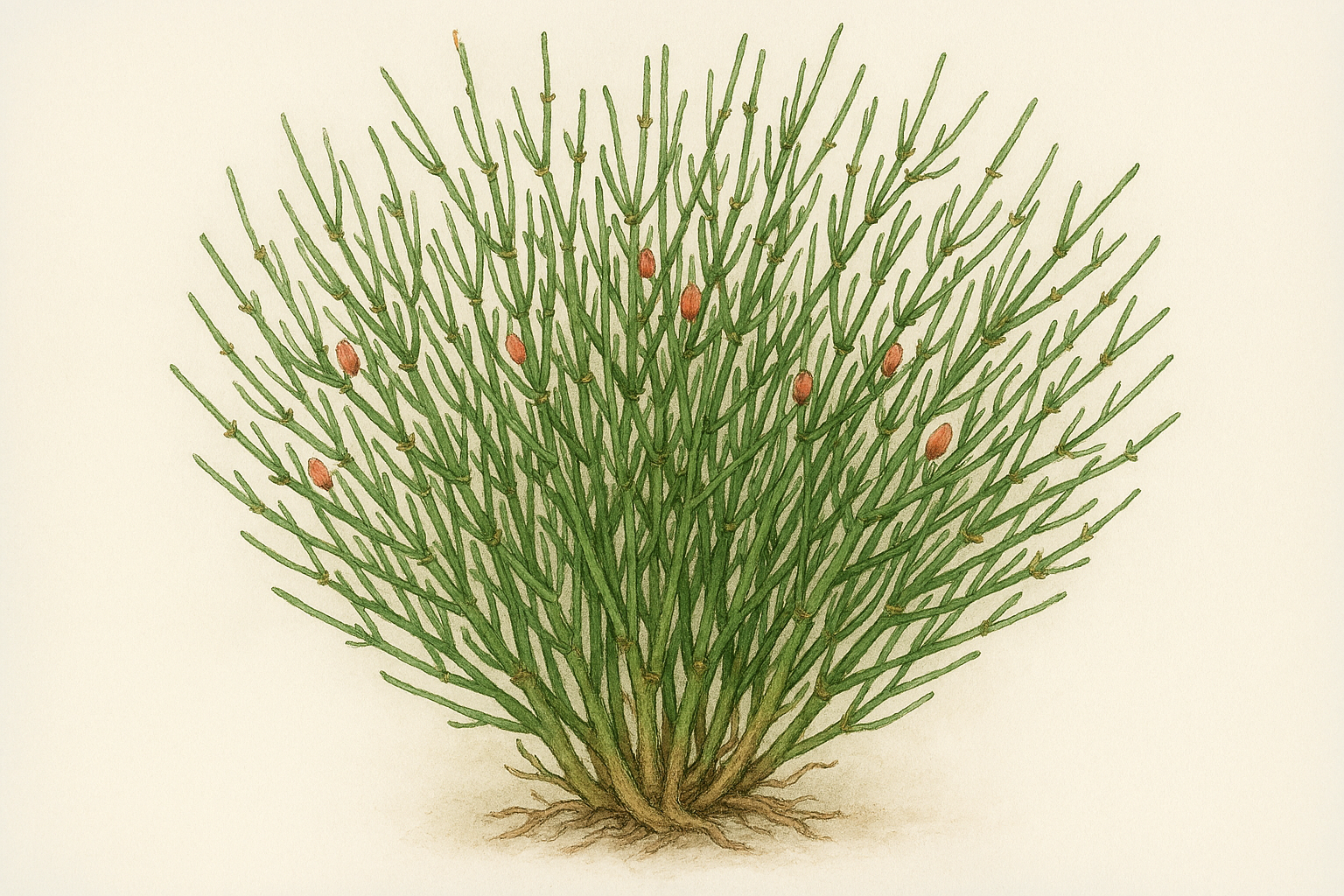
Ephedra, encompassing species like Ephedra sinica (Ma Huang) and Ephedra vulgaris within the Ephedraceae family, is a potent herb celebrated for its remarkable ability to clear respiratory congestion, boost energy, and support urinary health. Known as Mormon Tea or Brigham’s Tea—named after Mormon leader Brigham Young, who promoted its use among his followers—this evergreen shrub thrives in arid regions of Asia, North America, and Europe. Its above-ground parts and roots, rich in ephedrine and pseudoephedrine, have been used for millennia in Traditional Chinese Medicine (TCM) and Native American healing to treat colds, asthma, and arthritis. In this comprehensive article, we’ll explore the multifaceted benefits of Ephedra, its nutritional and bioactive profile, and how to safely incorporate it into your wellness routine, noting its restricted status in many regions.

A Desert Dynamo of Energy and Clarity
Ephedra is a wiry, leafless shrub that flourishes in harsh desert environments, its green, jointed stems and small, scale-like leaves evoking resilience in adversity. The name Ephedra derives from Greek, meaning “sitting upon,” possibly referring to its growth on rocky terrain, while sinica denotes its Chinese origin. Known as Ma Huang in TCM, it translates to “hemp yellow,” reflecting its yellowish stems and historical use alongside cannabis in herbal formulas. In the American West, it earned the name Mormon Tea for its caffeine-free, stimulating brew, widely used by Mormon pioneers as a tonic and decongestant. Native American tribes, such as the Paiute and Shoshone, used Ephedra for respiratory ailments, rheumatism, and urinary issues, often brewing it into a tea or applying it as a poultice.
Ephedra’s versatility extends beyond medicine—its stems were used in traditional crafts, and its stimulating properties made it a ritual herb in some cultures. In modern herbalism, Ephedra is valued for its bronchodilator, decongestant, and diuretic effects, though its use is heavily regulated due to safety concerns related to ephedrine, a powerful stimulant. Research highlights its efficacy in relieving asthma, hay fever, and fluid retention, but its potential for cardiovascular side effects necessitates caution. Whether brewed as a tea, taken as a tincture, or applied externally, Ephedra embodies a desert-born blend of vitality, clarity, and respiratory relief, tempered by the need for careful use.

Body Systems and Organs Supported by Ephedra
Ephedra’s therapeutic reach primarily targets the respiratory and digestive systems, with a focus on clearing congestion, stimulating circulation, and promoting fluid balance. It supports:
- Respiratory: Opens airways, clears mucus, and relieves bronchial spasms.
- Digestive: Supports digestion and reduces fluid retention in the gut.
Ephedra influences key organs, particularly the lungs, while its actions extend to mucous membranes, making it an ideal remedy for respiratory infections, allergies, and urinary issues.

Bioactive and Medicinal Power of Ephedra
Ephedra’s therapeutic potency stems from its rich array of bioactive compounds, including ephedrine (a salt of an alkaloid), pseudoephedrine, flavone, essential oil, saponin, tannin, and flavonoids. The root also contains ephedrine alkaloids and tannins, contributing to its astringent properties. These compounds drive Ephedra’s extensive medicinal actions:
- Alterative: Promotes systemic detoxification, restoring balance and vitality.
- Anti-rheumatic: Relieves joint pain and inflammation, supporting arthritis and rheumatism.
- Anti-allergic: Reduces allergic responses, alleviating hay fever and respiratory sensitivities.
- Anti-spasmodic: Relaxes bronchial and muscular spasms, easing asthma and coughs.
- Decongestant: Clears nasal and bronchial congestion, improving breathing.
- Diaphoretic: Induces sweating, aiding fever resolution and detoxification.
- Diuretic: Increases urine production, supporting kidney function and reducing fluid retention.
- Expectorant: Loosens and expels mucus, relieving respiratory infections.
- Stimulant: Boosts energy, alertness, and sympathetic nervous system activity, mimicking adrenaline.
- Tonic: Strengthens respiratory and urinary systems, enhancing overall vitality.
- Root – Astringent: Tightens tissues, reducing diarrhea, excessive sweating, and postpartum fluid loss.
These actions make Ephedra a powerful remedy for respiratory conditions, allergies, arthritis, and urinary issues, with a stimulating, warming profile that requires cautious dosing due to its potent effects on the nervous system.

Nutritional Profile
Ephedra provides a modest array of nutrients, including:
- Minerals:
- Phosphorus: Supports energy metabolism and bone health.
- Calcium: Enhances bone and muscle function.
- Potassium: Regulates fluid balance and nerve activity.
- Sodium: Maintains fluid balance.
- Magnesium: Supports muscle and nerve health.
- Copper: Aids connective tissue and immune function.
- Zinc: Boosts immunity and tissue repair.
- Chlorine: Supports fluid balance and digestion.
- Sulphur: Enhances skin and connective tissue health.
- Iron: Supports blood health and oxygen transport.
- Flavonoids: Provide antioxidant protection, reducing oxidative stress.
While not a primary nutritional source, Ephedra’s mineral content supports its role as a tonic and diuretic herb, particularly for respiratory and urinary health.

Traditional and Modern Applications
Ephedra has been a staple in Traditional Chinese Medicine, Native American healing, and early Western herbalism, with applications divided into internal and external uses:
Internal Applications
- Respiratory Health: Ephedra’s bronchodilator, decongestant, and expectorant properties make it a premier remedy for asthma, colds, flu, bronchitis, pneumonia, and hay fever. Its ephedrine content relaxes airways while increasing alertness, providing relief from wheezing and congestion. A tea (1/2–1 grain tablets or 4–12 g Western Ephedra/2–6 g Ma Huang) or tincture clears mucous membranes and supports breathing.
- Allergies: Its anti-allergic action alleviates symptoms of hay fever, sinus congestion, and respiratory sensitivities, reducing swelling in mucous membranes.
- Arthritis and Rheumatism: Its anti-rheumatic and anti-spasmodic properties relieve joint pain, inflammation, and muscle spasms, supporting mobility.
- Urinary Health: Its diuretic effect treats water retention, urinary tract infections, and fluid imbalances, flushing out toxins and bacteria without excessive urination.
- Cardiovascular Support: Used historically for low blood pressure, its stimulant action boosts circulation, though caution is needed for hypertension.
- Infections: Reputed as a curative for syphilis in traditional systems, it supports immune responses to bacterial infections.
- Root Applications: The astringent root treats diarrhea, night sweats, deficiency sweats, and postpartum sweating, tightening tissues and reducing fluid loss.
External Applications
- Respiratory Support: Poultices of Ephedra stems applied over the chest or bronchial areas relieve congestion and bronchial spasms. Inhalations of steam infused with Ephedra clear nasal passages.
- Joint and Muscle Relief: Poultices or baths soothe arthritic joints and muscle pain, leveraging anti-inflammatory and anti-spasmodic effects.
- Historical Uses: Used topically for skin inflammations and swellings in traditional practices.

Dosage and Preparation
Ephedra can be prepared as a tea, tincture, tablet, poultice, bath, or inhalation, with dosages tailored to the condition and strictly regulated due to its potency:
- Tablets: 1/2–1 grain (Western Ephedra: 4–12 g; Ma Huang: 2–6 g), taken sparingly under professional supervision for respiratory or arthritic relief.
- Tea: Steep 2–6 g Ma Huang or 4–12 g Western Ephedra in hot water, taken in small doses (1–2 tbsp) for colds, asthma, or urinary support.
- Tincture: 1–2 mL, taken 1–2 times daily, diluted in water or juice, for decongestant or diuretic effects.
- Root Decoction: Simmer 6–15 g root in water, taken in small doses for diarrhea or excessive sweating.
- Poultice/Bath: Crush stems into a paste or steep in hot water for topical application or baths to relieve chest congestion or joint pain.
- Inhalation: Add Ephedra to boiling water, inhaling the steam for nasal and bronchial relief.
Important: Ephedra is banned in the USA and restricted in the EU and UK to registered pharmacies under pharmacist supervision due to safety risks. Use only under professional guidance, adhering to recommended dosages to avoid adverse effects like hypertension or tachycardia.

Cautions and Contraindications
Ephedra requires extreme caution due to its potent stimulant effects and legal restrictions:
- Legal Restrictions: Banned in the USA; restricted in the EU and UK to pharmacy dispensing under supervision due to ephedrine’s potential for abuse and cardiovascular risks.
- Pregnancy: Contraindicated, as its stimulant and uterine-stimulating properties may pose risks to the fetus.
- Yin Deficiency or Dry Conditions: Avoid in TCM yin-deficient states (e.g., dryness, night sweats, or heat), as its warming and drying properties may exacerbate symptoms.
- Medical Conditions: Use with extreme caution in hypertension, thyroid disease, diabetes, or cardiovascular disorders, as ephedrine can cause tachycardia, hypertension, or arrhythmias.
- Caffeine and Other Stimulants: Do not combine with caffeine (e.g., coffee, guarana) or other stimulants, as this increases the risk of adverse cardiovascular effects.
- Excessive Use: High doses or prolonged use (beyond 1–2 weeks) can lead to serious risks, including heart palpitations, anxiety, insomnia, or stroke.
- Children and Elderly: Avoid in children; use cautiously in the elderly due to heightened sensitivity to stimulants.
- Side Effects: Higher doses may cause hypertension, tachycardia, nervousness, insomnia, or sweating; discontinue if these occur.
- Drug Interactions: May interact with MAO inhibitors, beta-blockers, or medications for hypertension, diabetes, or thyroid conditions; consult a healthcare provider.
- Allergies: Rare allergic reactions may occur, particularly in those sensitive to Ephedraceae plants.

Synergistic Combinations and Substitutions
Ephedra works best in formulas, pairing well with other herbs to enhance its effects and mitigate its drying tendencies:
- With Menthol, Camphor, and Oil of Thyme: Enhances decongestant and bronchodilator effects for respiratory relief.
- With Licorice or Marshmallow: Combines root with demulcents to counter drying effects, soothing mucous membranes in coughs or urinary issues.
- With Elderflower or Yarrow: Boosts diaphoretic and decongestant properties for colds and flu.
- With Willow Bark: Supports anti-rheumatic effects, relieving arthritic pain and inflammation.
For substitutions:
- Zi Su Ye (Perilla frutescens): A common TCM substitute, pungent and warm, targeting the lungs but less potent (use 20–30 g to replace 6–9 g Ma Huang).
- Herbal Combinations:
- Bai Guo and Sang Bai Pi: For wheezing/asthma.
- Gui Zhi and Fang Feng: To promote sweating.
- Sang Ye and Sheng Jiang: For coughs from colds.
- Gui Zhi and Huo Xiang: For wind-cold patterns.
- Su Zi, Xing Ren, and Huang Qin: For lung heat wheezing.
- Gan Jiang, Qian Hu, and Fu Ling: For fluid congestion wheezing.
- Shu Di Huang and Fu Zi: For deficient kidney yin cough.
- Jing Jie Sui and Fang Feng: For patients with weak qi.
- Bitter Orange (Citrus aurantium): Contains synephrine, a milder stimulant, but has cardiovascular risks.
- Caffeine-containing Herbs (e.g., Guarana, Green Tea): Offer stimulant effects but lack Ephedra’s respiratory benefits and carry risks.

Cultural and Historical Significance
Ephedra’s history is deeply rooted in Traditional Chinese Medicine, Native American healing, and early Western herbalism. In TCM, Ma Huang has been used for over 5,000 years to treat asthma, colds, and fevers, often combined with licorice to balance its intensity. Native American tribes brewed Mormon Tea for respiratory ailments, rheumatism, and urinary infections, valuing its caffeine-free stimulation. Mormon pioneers, led by Brigham Young, adopted it as a staple tonic, spreading its use across the American West. In the 19th century, eclectic physicians prescribed Ephedra for bronchial issues and syphilis, leveraging its stimulant properties. In the 20th century, ephedrine was isolated and used in pharmaceuticals, leading to its popularity in weight-loss supplements until safety concerns prompted bans in the USA (2004) and restrictions elsewhere. Today, Ephedra remains a regulated but valued herb in controlled settings, with research confirming its bronchodilator and anti-allergic efficacy.

Ephedra (Ephedra sinica / vulgaris) is a stimulating herb of respiratory relief and vitality, blending desert resilience with profound therapeutic power. From clearing asthma and colds to relieving arthritis and supporting urinary health, this Mormon Tea offers a dynamic path to wellness. Its bioactive compounds, including ephedrine, pseudoephedrine, and flavonoids, deliver bronchodilator, decongestant, and diuretic benefits, making it a potent remedy for respiratory, rheumatic, and fluid-related conditions.
Whether brewed as a clarifying tea, applied as a poultice, or used in regulated pharmaceutical forms, Ephedra invites us to harness its energizing energy with extreme caution. Its banned status in the USA and restricted use in the EU/UK, along with risks in hypertension, pregnancy, or with caffeine, necessitate professional supervision. By incorporating Ephedra into your routine under strict guidance, you can unlock its potential to invigorate, clear, and restore. Let this Brigham’s Tea inspire you to explore the timeless wisdom of herbal medicine, connecting you to a legacy of resilience and healing, tempered by respect for its power.


Leave a Reply