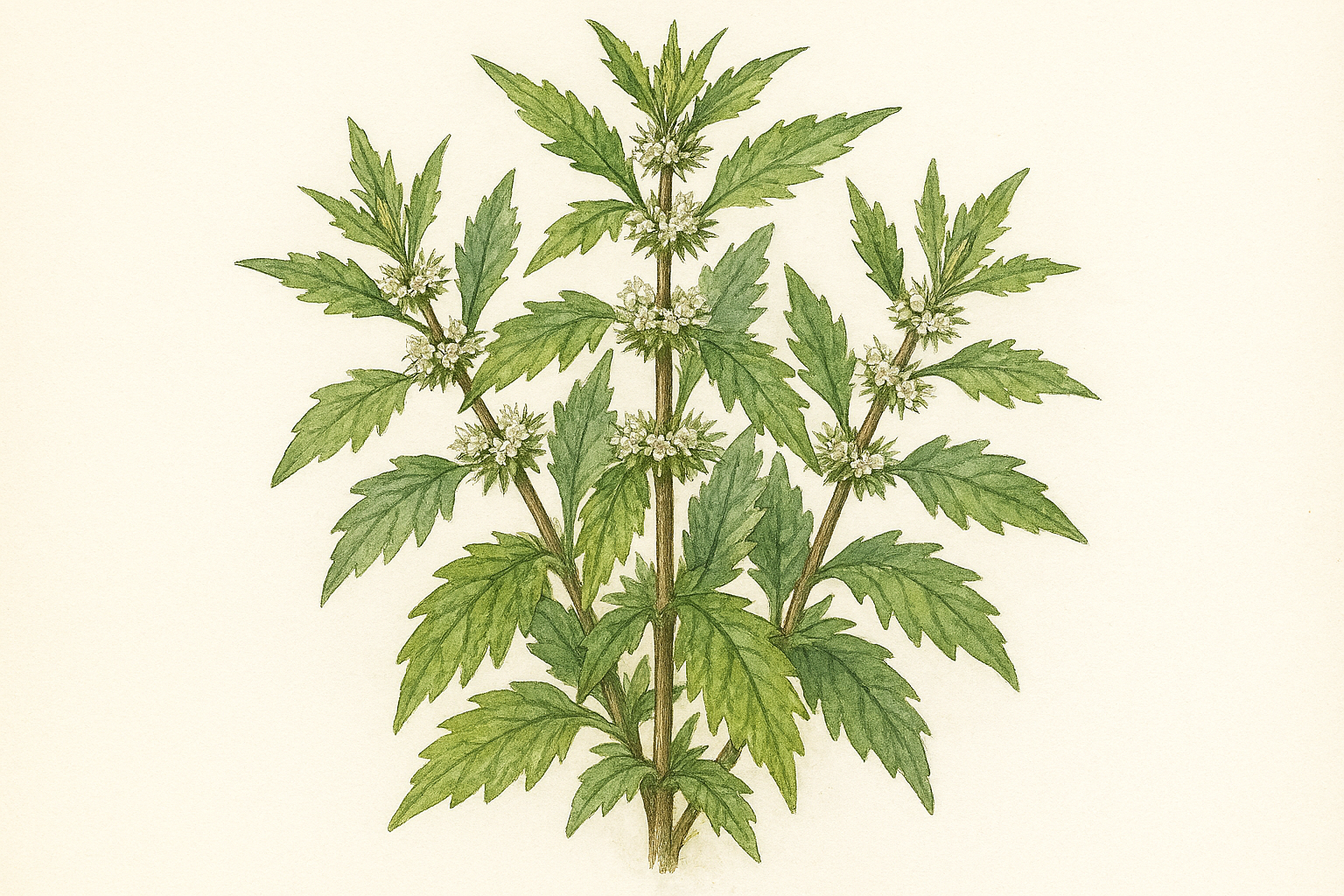
Bugleweed, scientifically known as Lycopus europaeus and a member of the Labiatae (Lamiaceae) family, is a humble yet powerful herb revered for its calming and regulatory effects on the thyroid, heart, and nervous system. Known by evocative names such as Water Bugle, Sweet Bugle, Gipsyweed, and Gypsywort, and called Farasyon Maeiy in Arabic, ou di un in Chinese, and strandklo in Swedish, bugleweed has a rich history in European and global herbal traditions. Its aerial parts and whole herb, rich in phenolic compounds and antioxidants, offer targeted support for hyperthyroidism, heart palpitations, and respiratory issues. In this comprehensive article, we’ll explore the multifaceted benefits of bugleweed, its nutritional and bioactive profile, and how to safely incorporate it into your wellness routine.

A Herb of Serenity and Balance
Bugleweed is a perennial herb that thrives in damp, marshy areas across Europe, North America, and Asia, its square stems, serrated leaves, and clusters of white or pink flowers creating a subtle yet striking presence. The name Lycopus derives from Greek, meaning “wolf foot,” possibly referencing the shape of its leaves, while europaeus denotes its European origin. Its common names, such as Water Bugle and Gipsyweed, reflect its affinity for wet habitats and its historical use by nomadic healers. In traditional herbalism, bugleweed was prized for its ability to calm an overactive thyroid, soothe nervous coughs, and regulate heart function, particularly in cases of palpitations and fluid retention.
Bugleweed’s calming energy extends beyond medicine—its gentle sedative properties were used to ease anxiety and promote restful sleep, while its astringent qualities aided in wound healing. Today, bugleweed remains a cornerstone of herbal medicine, with research highlighting its potential in treating hyperthyroidism, Grave’s disease, and autonomic nervous system dysregulation. Whether taken as an infusion, tincture, or applied as a liniment, bugleweed embodies a serene blend of balance and healing power.

Body Systems and Organs Supported by Bugleweed
Bugleweed’s therapeutic reach spans multiple body systems, making it a versatile herb for endocrine, cardiovascular, and nervous system health. It supports:
- Endocrine: Regulates thyroid and adrenal function, particularly in hyperthyroidism.
- Respiratory: Soothes coughs and supports lung health.
- Circulatory: Calms heart palpitations and regulates cardiovascular function.
- Nervous: Reduces anxiety and promotes relaxation.
- Urinary: Promotes kidney function and fluid elimination.
- Digestive: Supports gastrointestinal health by reducing diarrhea.
Bugleweed influences key organs, including the lungs, kidneys, and gastrointestinal tract, while its actions extend to lung, heart, thyroid, and adrenal tissues, making it an ideal remedy for hyperthyroidism, nervous palpitations, and respiratory conditions.

Bioactive and Medicinal Power of Bugleweed
Bugleweed’s therapeutic potency stems from its rich array of bioactive compounds, including rosmarinic acid, ellagic acid, chlorogenic acid, luteolin-7-beta-glucoside, lithospermic acid, phenolic substances, lycopin, bitter principle, tannins, volatile essential oil, fatty acids, copper, and zinc. These compounds contribute to its extensive medicinal actions:
- Antitussive: Suppresses coughs, relieving respiratory irritation.
- Anti-diarrhoeal: Tightens gastrointestinal tissues, reducing diarrhea.
- Antigout: Reduces inflammation and uric acid buildup, supporting joint health.
- Antimicrobial and Anti-parasitic: Combats bacterial, fungal, and parasitic infections.
- Antioxidant: Neutralizes free radicals, protecting cells from oxidative stress.
- Anti-inflammatory: Reduces inflammation in the thyroid, heart, and skin.
- Analgesic: Eases pain, particularly in nervous or inflammatory conditions.
- Astringent: Tones tissues, aiding in bleeding and fluid discharge control.
- Cardioactive: Regulates heart rhythm and supports weak hearts with fluid retention.
- Dermatological: Promotes skin healing, addressing bruises and irritations.
- Diuretic: Increases urine production, reducing fluid retention and supporting kidney function.
- Endocrine: Calms overactive thyroid activity, potentially aiding Grave’s disease.
- Emmenagogue (Chinese Variety): Promotes menstrual flow, supporting reproductive health.
- Narcotic and Sedative: Induces relaxation and mild sedation, alleviating anxiety and nervous tension.
- Peripheral Vasoconstrictor: Constricts peripheral blood vessels, supporting cardiovascular stability.
These actions make bugleweed a dynamic remedy for hyperthyroidism, heart palpitations, nervous coughs, and inflammatory conditions, with a calming energy that soothes both body and mind.

Nutritional Profile
Bugleweed provides a range of nutrients and bioactive compounds that support its medicinal effects:
- Fatty Acids: Support skin and heart health, reducing inflammation.
- Copper and Zinc: Enhance immune function and tissue repair.
- Phenolic Compounds (Rosmarinic, Ellagic, Chlorogenic Acids): Offer antioxidant and anti-inflammatory benefits, protecting against oxidative stress.
- Tannins: Provide astringent and antimicrobial effects, supporting tissue health.
While not a primary nutritional source, bugleweed’s bioactive compounds amplify its role as a thyroid, heart, and nervous system tonic.

Traditional and Modern Applications
Bugleweed has been a staple in European, Chinese, and Native American herbalism, with modern applications building on its traditional uses. Its applications are divided into internal and external uses:
Internal Applications
- Thyroid Health: Bugleweed is a specific remedy for overactive thyroid (hyperthyroidism), particularly when accompanied by symptoms like tight breathing, palpitations, and shaking. It calms thyroid activity, potentially aiding Grave’s disease, and supports healthy adrenal function. An infusion (1 oz dried herb in 1 pt. boiling water, taken in frequent wineglass doses) or fluid extract (10–30 drops) is effective.
- Cardiovascular Support: Its cardioactive and peripheral vasoconstrictor properties calm palpitations of nervous origin, support weak hearts with fluid retention, and regulate tachycardia and autonomic nervous system dysregulation. Bugleweed is ideal for anxiety-related heart issues.
- Respiratory Health: As an antitussive, bugleweed eases coughs, especially those linked to nervous tension, and supports lung health in conditions like consumption (tuberculosis) and lung bleeding.
- Digestive Health: Its astringent and anti-diarrhoeal properties reduce diarrhea and tone gastrointestinal tissues, supporting overall digestive balance.
- Nervous System Support: Its sedative and narcotic properties alleviate anxiety, promote relaxation, and ease nervous tension, making it a valuable remedy for stress-related conditions.
- Urinary Health: Its diuretic action reduces fluid retention, supporting kidney function and relieving edema.
External Applications
- Skin and Wound Healing: A liniment made from bugleweed (particularly the Chinese variety) soothes bruises and injuries, leveraging its dermatological and astringent properties to promote tissue repair.

Dosage and Preparation
Bugleweed can be prepared as an infusion, fluid extract, powder, or liniment, with dosages tailored to the condition:
- Infusion: 1 oz dried herb steeped in 1 pt. boiling water, taken in frequent wineglass doses (approximately 2–4 oz) throughout the day.
- Fluid Extract: 10–30 drops, taken 1–3 times daily, diluted in water or juice.
- Powder: 3–9 g daily, or dry Lycopin 1–4 grains, taken in capsules or mixed with water. Note: Alcohol extracts (e.g., tinctures) are more potent than water extracts due to unoxidized alcohol-soluble phenolic compounds.
- Liniment: Steep dried herb in alcohol or vinegar, applied topically to bruises or injuries.
Always start with a low dose and consult a healthcare professional, especially for thyroid or heart conditions, due to its potent effects.

Cautions and Contraindications
Bugleweed requires careful use due to its potent sedative and endocrine effects:
- Pregnancy: Avoid, as its emmenagogue (Chinese variety) and narcotic properties may pose risks to the fetus.
- Severe Vata Derangement: Use cautiously in Ayurvedic Vata imbalances (characterized by dryness, anxiety, or nervousness), as its sedative and astringent effects may exacerbate these conditions.
- Thyroid Conditions: Avoid in hypothyroidism, as bugleweed may suppress thyroid function further. Consult a healthcare provider for hyperthyroidism or Grave’s disease.
- Drug Interactions: Its cardioactive and sedative properties may interact with heart medications, sedatives, or thyroid drugs, so consult a healthcare provider.
- Long-Term Use: Limit use to avoid potential over-sedation or thyroid suppression.

Synergistic Combinations and Substitutions
Bugleweed works best in formulas, pairing well with other herbs to enhance its effects:
- With Motherwort: Supports hyperthyroid-related cardiac reactions, calming palpitations and anxiety.
- With Lemon Balm: Enhances sedative effects, reducing nervous tension and stress.
- With Hawthorn: Bolsters cardiovascular support, particularly for weak hearts with fluid retention.
For substitutions, consider:
- Broom (Cytisus scoparius) or Iris (Iris versicolor): For thyroid imbalances, though they lack bugleweed’s sedative properties.
- Broom and Hyssop: For nervous coughs associated with heart issues and fluid retention, offering similar cardioactive and respiratory benefits.

Cultural and Historical Significance
Bugleweed’s history is deeply rooted in European and global herbal traditions. In medieval Europe, it was used to treat consumption, heart palpitations, and nervous disorders, often brewed into teas or tinctures. In Chinese medicine, the variety Lycopus lucidus was valued as an emmenagogue and sedative, supporting menstrual and nervous system health. Native American tribes used related species for respiratory and wound-healing purposes, recognizing its astringent and calming qualities. Its name Gipsyweed reflects its use by traveling healers, who valued its versatility. Today, bugleweed is a subject of research for its potential in treating hyperthyroidism, Grave’s disease, and cardiovascular issues, with its phenolic compounds drawing scientific interest for their antioxidant and anti-inflammatory effects.

Bugleweed (Lycopus europaeus) is a calming herb that blends serene beauty with profound healing power. From regulating overactive thyroids and calming heart palpitations to soothing coughs and easing anxiety, this versatile plant offers a holistic path to wellness. Its bioactive compounds, including rosmarinic acid, ellagic acid, and tannins, deliver antitussive, cardioactive, and sedative benefits, making it a potent remedy for endocrine, cardiovascular, and nervous system disorders.
Whether sipped as an infusion, taken as a fluid extract, or applied as a liniment, bugleweed invites us to harness its tranquil energy with mindfulness. Cautious use is essential to avoid contraindications, particularly during pregnancy or in Vata imbalances. By incorporating bugleweed into your routine under the guidance of a healthcare professional, you can unlock its potential to balance, soothe, and rejuvenate. Let this sweet bugle inspire you to explore the timeless wisdom of herbal medicine, connecting you to a legacy of serenity and healing.




Leave a Reply