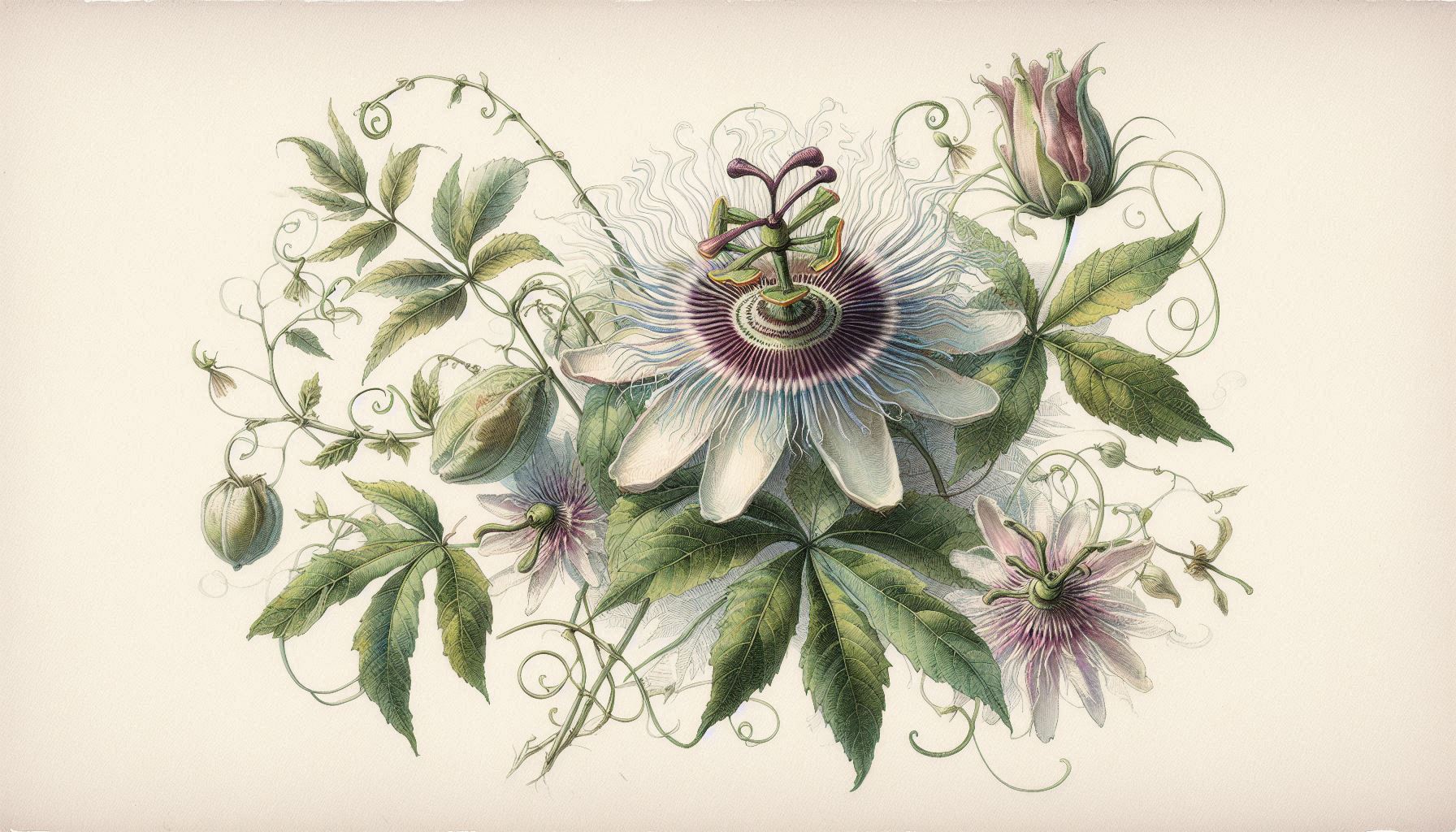
Passion Flower, scientifically known as Passiflora incarnata and a member of the Passifloraceae family, is a revered herb celebrated for its profound ability to soothe the nervous system, alleviate pain, and promote restful sleep. Known by evocative names such as Passion Vine, Passiflora, Passion of Christ, Apricot Vine, Grandilla, Maracoc, Maypops, and Purple Passion Flower, this climbing vine is named for its intricate, radiant flowers, which early Christian missionaries likened to symbols of Christ’s passion. Its flowers, leaves, stems, and fruit, rich in alkaloids, flavonoids, and GABA-enhancing compounds, offer nervine, sedative, and anti-spasmodic properties. Used for centuries by Native Americans, European herbalists, and modern practitioners, Passion Flower is a cornerstone of herbal medicine for insomnia, anxiety, and nerve pain. In this comprehensive article, we’ll explore the multifaceted benefits of Passion Flower, its rich nutritional and bioactive profile, and how to safely incorporate it into your wellness routine.

A Radiant Vine of Tranquility and Healing
Passion Flower is a fast-growing, perennial vine that thrives in warm climates across the Americas, its delicate tendrils adorned with stunning, star-like flowers and tart, egg-shaped fruit. Its common names reflect its spiritual and ecological significance: Passion of Christ symbolizes the flower’s resemblance to the crown of thorns and nails of the crucifixion, while Maypops refers to the popping sound of its ripe fruit when stepped on. Native American tribes, such as the Cherokee, used Passion Flower to treat insomnia and wounds, while European settlers adopted it for nervous disorders. In the 19th century, eclectic physicians like Edwin Hale prescribed it for “nervous restlessness” and epilepsy, valuing its non-addictive sedative effects.
Passion Flower’s medicinal legacy centers on its ability to calm the mind, relax muscles, and reduce inflammation, making it a go-to remedy for conditions from Parkinson’s disease to shingles nerve pain. Its versatility extends beyond medicine—its fruit is eaten fresh or juiced for its nutritive benefits, and its flowers are dried for ornamental use. Today, Passion Flower is valued for its anti-anxiety, hypnotic, and anti-inflammatory properties, offering relief from stress, asthma, and muscle aches. Modern research highlights its ability to boost gamma-aminobutyric acid (GABA) in the brain, promoting relaxation. Whether sipped as a calming tea, applied as a soothing poultice, or taken as a tincture, Passion Flower embodies a radiant blend of tranquility, strength, and nourishment, inviting us to harness its serene wisdom for nervous, circulatory, and musculoskeletal wellness.

Body Systems and Organs Supported by Passion Flower
Passion Flower’s therapeutic reach spans multiple body systems, making it a holistic ally for nervous, circulatory, musculoskeletal, digestive, and respiratory health. It supports:
- Nervous: Calms anxiety, insomnia, and nervous tension, nourishing the nervous system.
- Circulatory: Lowers blood pressure and improves circulation, supporting heart health.
- Musculoskeletal: Relaxes muscle spasms and reduces inflammation, easing pain.
- Digestive: Soothes gastrointestinal disorders and supports bowel health.
- Respiratory: Eases asthma and respiratory tension, promoting clearer breathing.
Passion Flower influences key organs, including the lungs, heart, and brain, while its actions target tissues like nerves, muscles, lung, heart, and bowels, making it an ideal remedy for stress-related disorders, nerve pain, and respiratory spasms.

The Bioactive and Medicinal Power of Passion Flower
Passion Flower’s therapeutic potency stems from its rich array of bioactive compounds, including:
- Alkaloids: Harman, harmin, harmaline, harmol, and passiflorine, offering sedative, hypnotic, and anti-spasmodic effects.
- Flavonoids: Vitexin, isovitexin, apigenin, chrysin, and orientin, providing antioxidant, anti-inflammatory, and nervine benefits.
- Phenolic Acids: Formic acid, butyric acid, and GABA, enhancing relaxation and mood regulation.
- Other Compounds: Cyanogenic glycosides, sterols, palmitic acid, stearic acid, oleic acid, linoleic acid, maltol, essential oils, gums, and sugars, contributing to its emollient, diuretic, and nutritive properties.
These compounds drive Passion Flower’s extensive medicinal actions:
- Anodyne: Relieves mild to moderate pain, including nerve pain and muscle aches.
- Anti-depressant: Lifts mood, particularly during menopause, by supporting neurotransmitter balance.
- Anti-anxiety: Reduces anxiety and stress, boosting GABA levels in the brain.
- Anti-spasmodic: Relaxes muscle, bronchial, and gastrointestinal spasms, easing asthma, cramps, and tension.
- Anti-inflammatory: Reduces inflammation in muscles, joints, and nerves, aiding conditions like sciatica and shingles.
- Diuretic: Increases urine flow, flushing toxins and supporting kidney health (fruit and herb).
- Emollient: Soothes and softens skin and mucous membranes, aiding external healing.
- Hypnotic: Induces restful sleep, addressing intransigent insomnia.
- Nervine: Calms the nervous system, reducing hysteria, seizures, and nervous headaches.
- Sedative: Promotes relaxation, counteracting restlessness and epilepsy.
- Nutritive (Fruit): Supplies vitamins and antioxidants, supporting overall vitality.
These actions make Passion Flower a versatile remedy for nervous disorders, muscle pain, respiratory tension, and digestive issues, with a calming, nutrient-rich profile ideal for both acute and chronic conditions.

Nutritional Profile
Passion Flower, particularly its fruit, provides a valuable array of nutrients that enhance its nutritive and antioxidant properties:
- Vitamins:
- Vitamin C: Provides 9% of the Daily Value (DV) per fruit, supporting immunity, skin repair, and antioxidant defenses.
- Vitamin A (Provitamin A Carotenoids like Beta-Carotene): Supplies 8% of the DV, enhancing vision, skin, and immune health.
- Minerals:
- Iron: Offers 2% of the DV per fruit, supporting oxygen transport (enhanced by vitamin C for absorption).
- Antioxidants:
- Polyphenols: Higher than in many tropical fruits (e.g., banana, mango, pineapple), reducing oxidative stress.
- Piceatannol (Seeds): May improve insulin sensitivity and metabolic health.
- Fiber: 2 g per fruit, supporting digestive health and satiety despite low calorie content.
Its nutrient profile, combined with its flavonoid and alkaloid content, makes Passion Flower an excellent choice for nervous system support, immune health, and metabolic balance, particularly through its edible fruit.

Traditional and Modern Applications
Passion Flower has been a staple in Native American, European, and modern herbalism, with applications divided into internal and external uses:
Internal Applications
- Nervous System Health: Passion Flower’s nervine, sedative, and anti-anxiety properties make it a premier remedy for intransigent insomnia, anxiety, nervous tension, hysteria, and depression (especially during menopause). It boosts GABA, calms the sympathetic nervous system, and reduces nervous headaches, seizures, and epilepsy. A tea or tincture is ideal, with 1 cup at night for sleep or twice daily for stress.
- Neurological and Pain Relief: Its anodyne and anti-spasmodic actions relieve nerve pain, neuralgia, shingles, and Parkinson’s disease symptoms, including convulsions and twitching, by depressing motor activity in the spinal cord.
- Musculoskeletal Health: Its anti-inflammatory and anti-spasmodic properties ease muscle aches, back pain, and sciatica, relaxing tense muscles and reducing inflammation.
- Respiratory Health: Its anti-spasmodic action soothes asthma, particularly when triggered by tension, and supports clearer breathing by relaxing bronchial muscles.
- Circulatory Health: Its sedative and circulatory-toning effects lower blood pressure, improve circulation, and support heart health, reducing arterial pressure.
- Digestive Health: Its anti-spasmodic and emollient properties soothe gastrointestinal disorders, haemorrhoids, and halitosis, calming bowel spasms.
- Culinary Uses: The fruit, eaten fresh or juiced, provides diuretic and nutritive benefits, supporting kidney health and vitality.
External Applications
- Pain and Inflammation: Poultices or baths with Passion Flower leaves and stems relieve aching muscles, inflammation, and nerve pain, leveraging its anti-inflammatory and emollient properties.
- Skin and Stress Relief: Passion Flower oil, extracted from the plant, is used in aromatherapy or massage for anxiety, ADHD, stress, and anti-aging, soothing skin and calming the mind.
- Wound Healing: Poultices promote healing of minor wounds and irritations, utilizing its emollient and vulnerary actions.

Dosage and Preparation
Passion Flower can be prepared as a tea, tincture, powder, capsules, fluid extract, poultice, bath, or oil, with dosages tailored to the condition:
- Tea: Steep 1 tsp dried flowers, leaves, or stems in 1 cup hot water for 10–15 minutes, drink up to 3 times daily for anxiety or respiratory support; 1 cup at night for insomnia.
- Tincture: 1–4 mL, 3 times daily, diluted in water, for nervous tension, pain, or asthma.
- Powder/Capsules: Take 2 “00” capsules (approximately 1–1.5 g) as needed for stress or muscle pain.
- Fluid Extract: 10–20 drops, 1–2 times daily, for severe insomnia or seizures.
- Poultice: Crush fresh or dried leaves/stems into a paste, apply to inflamed or painful areas.
- Bath: Steep 1–2 oz dried herb in 1 quart hot water, strain, and add to bathwater for muscle relaxation or skin soothing.
- Oil: Dilute essential oil (5–10 drops in 30 mL carrier oil) for massage or aromatherapy to relieve stress or inflammation.
- Fruit: Eat fresh or juiced, sparingly, for diuretic and nutritive benefits.
Important: Use moderate doses to avoid rare side effects like nausea or rapid heartbeat. Avoid combining with blood pressure medications, blood thinners, or alcohol, and do not use during pregnancy, nursing, or with liver damage. Due to its sedative effects, avoid driving or operating machinery after use. Source sustainably, as wild Passion Flower populations are sometimes overharvested.

Cautions and Contraindications
Passion Flower is generally safe and non-toxic but requires caution in specific cases:
- Side Effects: Rare, but may include nausea, rapid heartbeat, or drowsiness; reduce dose if these occur.
- Blood Thinners and Alcohol: Avoid combining with anticoagulants (e.g., aspirin, warfarin) or alcohol, as it may enhance bleeding risk or sedation.
- Blood Pressure Medications: Do not use with antihypertensives, as it may lower blood pressure excessively.
- Pregnancy and Nursing: Avoid due to insufficient safety data and potential sedative effects.
- Liver Damage: Contraindicated in liver disease or damage, as it may strain liver metabolism.
- Sedative Effects: Avoid when alertness is required (e.g., driving), as its hypnotic and sedative properties may impair responsiveness.
- Children: Safe in small doses (e.g., ½ tsp tea) for anxiety, but use under supervision.
- Allergies: Rare allergic reactions may occur; test in small doses before extensive use.

Synergistic Combinations and Substitutions
Passion Flower works well in formulas, pairing with complementary herbs to enhance its effects:
- With Valerian, Hops, and Jamaican Dogwood: Enhances insomnia relief, combining sedative and anti-spasmodic properties.
- With Warm Milk and Honey: Increases nutritive and calming effects for sleep or nervous tension.
- With Wood Betony, Liquorice, and Ginger: Soothes nervousness and sleeplessness, amplifying nervine and digestive benefits.
- With Chamomile: Boosts anti-anxiety and relaxation effects for stress and insomnia.
For substitutions:
- Skullcap with Lobelia (Small Amount, Outside UK): Offers similar nervine and sedative benefits but requires caution due to Lobelia’s potency.
- Valerian, Skullcap, or Mistletoe: Provide calming and sleep-promoting effects but may lack Passion Flower’s anti-inflammatory or respiratory benefits.

Cultural and Historical Significance
Passion Flower’s history spans centuries, rooted in Native American and European traditions. The Cherokee used it for sleep and wound healing, while South American tribes brewed it into calming teas. Spanish missionaries in the 16th century named it “Passion of Christ,” seeing its flower as a divine symbol, which popularized its use in Europe. In the 19th century, eclectic physicians prescribed it for neuralgia, epilepsy, and “female hysteria,” valuing its non-addictive sedation.
In folklore, Passion Flower symbolized peace and spiritual connection, often planted near homes to promote calm. Its fruit, Maypops, was a children’s treat in the American South, and its vines were used in basketry. Today, Passion Flower is a staple in herbal teas, tinctures, and anxiety supplements, with research validating its GABA-enhancing, anxiolytic, and anti-inflammatory effects. Its legacy as a calming vine endures, reflected in its use for mental clarity, pain relief, and restful sleep.

Passion Flower (Passiflora incarnata) is the calming vine of nervous system serenity, blending radiant beauty with profound healing power. From soothing insomnia and easing anxiety to relieving nerve pain and supporting respiratory health, this sacred herb offers a holistic path to wellness. Its bioactive compounds, including alkaloids, flavonoids, and GABA, deliver nervine, sedative, and anti-inflammatory benefits, making it a cornerstone remedy for nervous, musculoskeletal, and circulatory health.
Whether sipped as a calming tea, applied as a soothing poultice, or taken as a tincture, Passion Flower invites us to embrace its tranquil energy with mindfulness. Its safety makes it accessible for most, though caution is needed with blood thinners, pregnancy, or liver issues. By incorporating Passion Flower into your routine under the guidance of a healthcare professional, you can unlock its potential to calm, heal, and nourish. Let this Passion of Christ inspire you to explore the timeless wisdom of herbal medicine, connecting you to a legacy of serenity and vitality.
Shop our herbal tea mugs!




Leave a Reply