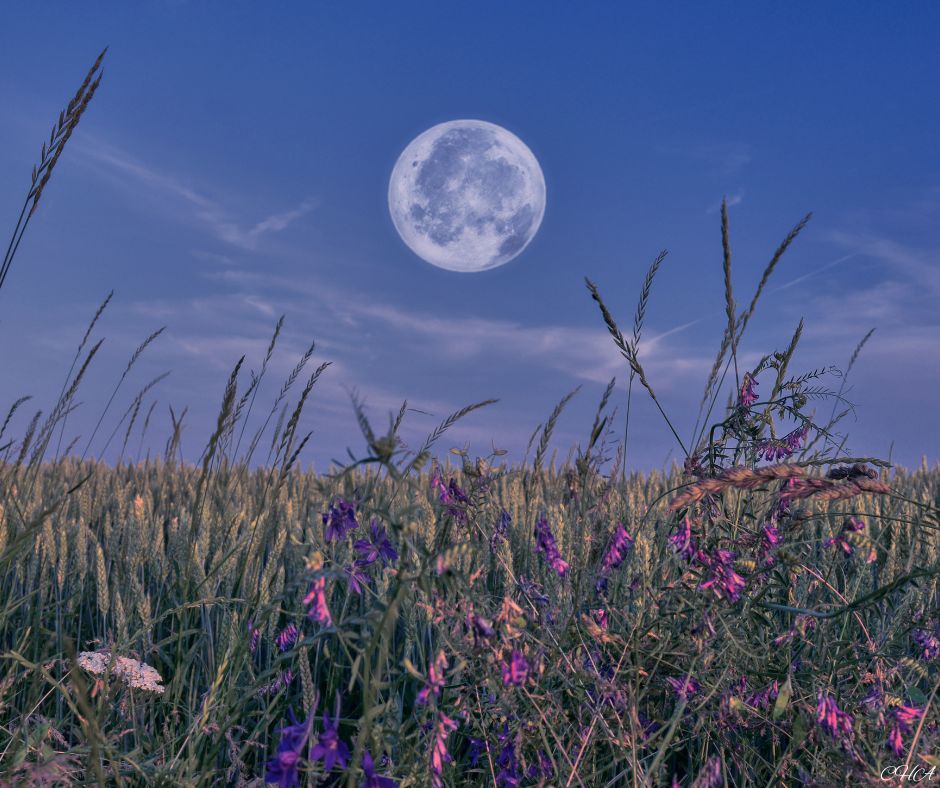
In the days when our connection to nature was more intimate, gardeners and herbalists observed the moon’s phases to enhance plant growth and harvest quality. Here’s how you can apply these ancient practices to modern herbal gardening:
Understanding Lunar Phases for Planting
- Plant Life Cycle and Moon Phases:
- Annual Herbs: These complete their life cycle in one season and are best planted during the first and second lunar phases (from new moon to full moon), when light is increasing. This period fosters growth above the soil.
- Examples: Anise in spring.
- Biennial Herbs: They take two years to complete their life cycle. Plant these during the third and fourth lunar phases (from full moon to new), as the light decreases, encouraging root development.
- Examples: Caraway in autumn or spring.
- Perennial Herbs: These live for multiple years and should be planted in the third lunar phase (full moon to quarter moon), balancing root and aerial growth.
- Examples: Catnip, Chamomile, Comfrey in autumn or spring.
- Annual Herbs: These complete their life cycle in one season and are best planted during the first and second lunar phases (from new moon to full moon), when light is increasing. This period fosters growth above the soil.

Harvesting by Lunar Phases
- Waxing Moon (First Two Phases):
- Energy in Aerial Parts: The moon’s increasing light draws life energy up, making this the time to harvest leaves, flowers, and to make tinctures when the active principles are at their peak in the plant’s above-ground parts.
- Waning Moon (Last Two Phases):
- Energy in Roots: As the moon decreases, energy moves downwards, ideal for harvesting roots. This phase is also when plants might reabsorb what was previously released into tinctures if left too long.
Planting by the Moon’s Zodiac Signs
- Water Signs (Cancer, Scorpio, Pisces): These are considered the most fruitful and moist signs, perfect for planting most herbs and crops due to their nurturing, feminine energy.
- Earth Signs (Taurus, Capricorn): Particularly good for fruit crops, enhancing growth and yield.
- Air Signs (Libra, Aquarius) and Fire Sign (Sagittarius): While not as ideal, these can still be used if the timing for water or earth signs isn’t possible, with Libra being the most favorable among them.

Lunar Quarters Explained
- First Quarter: From new moon to about half full, ideal for planting annuals.
- Second Quarter: From half full to full moon, continues the growth phase, good for aerial part development.
- Third Quarter: From full moon to half-moon, with decreasing light, it’s time for root growth and biennial planting.
- Fourth Quarter: As the moon wanes from half to new, this is considered a barren time for planting but perfect for other garden tasks like weeding, soil preparation, and composting.
By aligning your gardening activities with lunar phases, you’re tapping into an ancient wisdom that respects the natural rhythms of plant growth. On our herbal medicine website, we advocate for this holistic approach to ensure your herbs are not just grown but are also harvested at their most potent. Whether you’re a seasoned gardener or new to the practice, considering the moon’s phases can lead to healthier plants, richer harvests, and possibly more effective herbal remedies. Remember, gardening with the moon isn’t just about following a calendar; it’s about deepening your connection with nature’s cycles.


Leave a Reply