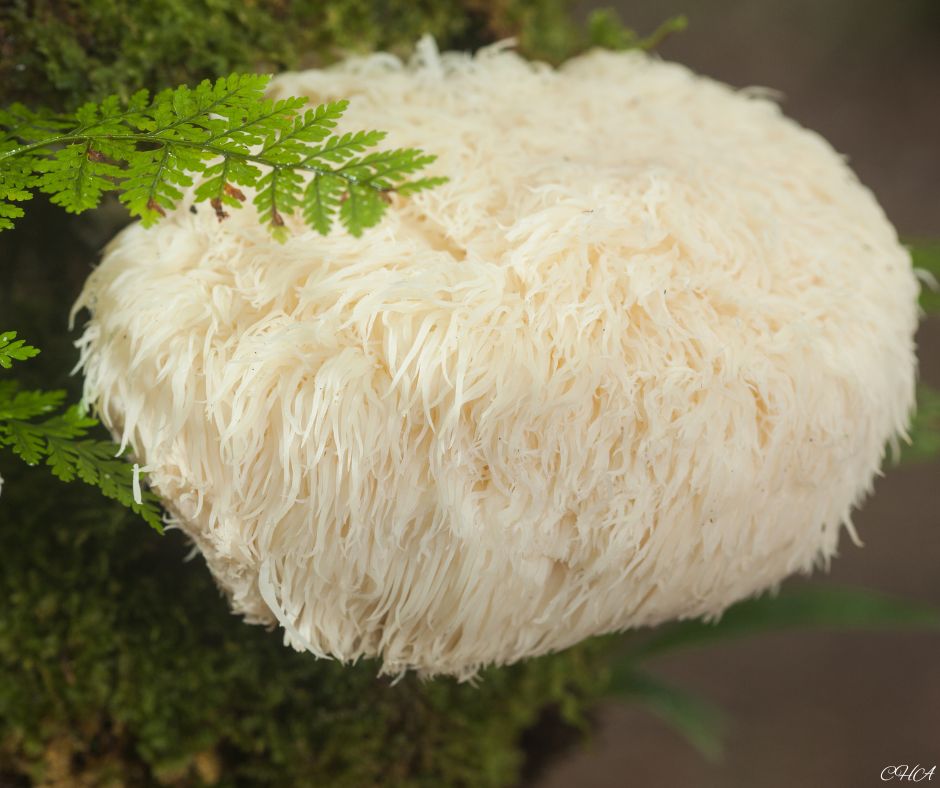
Lion’s Mane mushroom (Hericium erinaceus), with its distinctive cascading, icicle-like fruiting bodies, has garnered significant attention in recent years for its potential to support brain and nerve health. This edible fungus, native to North America, Europe, and Asia, has been used for centuries in traditional Chinese medicine (TCM) and other herbal traditions. Modern scientific research is now catching up, revealing compelling evidence of its neuroprotective, neuroregenerative, and cognitive-enhancing properties. This article explores the science behind Lion’s Mane, its applications in herbal medicine, and its potential role in managing neurodegenerative diseases like Parkinson’s and dementia.

Understanding Lion’s Mane Mushroom
Lion’s Mane, also known as the “pom-pom mushroom” or “bearded tooth,” grows on hardwood trees and is easily recognizable by its long, white, cascading spines. In traditional herbal systems, particularly TCM, it has been valued for its ability to nourish the brain, support digestion, and promote overall vitality. Its bioactive compounds—primarily hericenones and erinacines—are believed to drive its neurological benefits, making it a standout in the world of medicinal mushrooms.
These compounds stimulate the production of nerve growth factor (NGF), a protein critical for the growth, maintenance, and survival of neurons. NGF plays a pivotal role in neuroplasticity, the brain’s ability to adapt and form new neural connections, which is essential for learning, memory, and recovery from neurological damage.

The Science Behind Lion’s Mane and Brain Health
Nerve Growth Factor (NGF) and Neurogenesis
NGF is a neurotrophin, a family of proteins that support neuron health and regeneration. Low NGF levels are associated with neurodegenerative conditions like Alzheimer’s disease, Parkinson’s disease, and multiple sclerosis. Lion’s Mane is unique among natural compounds because its hericenones and erinacines can cross the blood-brain barrier, directly stimulating NGF production in the brain and peripheral nervous system.
A 2010 study published in Biomedical Research demonstrated that erinacines from Lion’s Mane significantly increased NGF synthesis in cultured astrocytes (brain support cells). This suggests that Lion’s Mane may promote the repair and regeneration of damaged neurons, a critical factor in addressing neurodegenerative diseases.
Cognitive Enhancement
Lion’s Mane has shown promise in improving cognitive function, particularly in older adults. A double-blind, placebo-controlled study conducted in Japan in 2009 (Phytotherapy Research) involved 30 participants with mild cognitive impairment. Those who took 1 gram of Lion’s Mane extract daily for 16 weeks showed significant improvements in cognitive function compared to the placebo group. The benefits were temporary, however, as cognitive scores declined after supplementation ceased, suggesting the need for consistent use.
Mood and Mental Health
Beyond cognition, Lion’s Mane may also support mental health by reducing symptoms of anxiety and depression. A 2010 study in Biomedical Research found that Lion’s Mane supplementation in mice reduced anxiety-like behaviors and improved mood, potentially due to its effects on hippocampal neurogenesis. In humans, a small 2019 study in Nutrients reported that women taking Lion’s Mane cookies (1.8 grams daily) for four weeks experienced reduced irritability and anxiety compared to a placebo group.
Anti-Inflammatory and Antioxidant Effects
Chronic inflammation and oxidative stress are key contributors to neurodegeneration. Lion’s Mane contains polysaccharides (like beta-glucans) and other antioxidants that reduce inflammation and protect neurons from oxidative damage. A 2015 study in International Journal of Molecular Sciences highlighted the mushroom’s ability to modulate inflammatory pathways, which could mitigate the progression of diseases like Parkinson’s and Alzheimer’s.

Lion’s Mane and Neurodegenerative Diseases
Parkinson’s Disease
Parkinson’s disease is characterized by the progressive loss of dopamine-producing neurons in the substantia nigra, leading to motor symptoms like tremors, rigidity, and bradykinesia. While no cure exists, Lion’s Mane may offer supportive benefits:
- Neuroprotection: Lion’s Mane’s antioxidant properties may protect dopaminergic neurons from oxidative stress, a major factor in Parkinson’s progression. A 2016 study in Journal of Medicinal Food found that Lion’s Mane extracts reduced oxidative damage in neuronal cells exposed to neurotoxins.
- NGF Stimulation: By promoting NGF production, Lion’s Mane may support the repair of damaged neurons and improve neural communication, potentially alleviating some motor and non-motor symptoms.
- Anti-Inflammatory Effects: Chronic inflammation exacerbates Parkinson’s pathology. Lion’s Mane’s ability to reduce pro-inflammatory cytokines may slow disease progression.
While human studies specific to Parkinson’s are limited, preclinical research is promising. For example, a 2014 study in Evidence-Based Complementary and Alternative Medicine showed that Lion’s Mane improved motor function in mice with Parkinson’s-like symptoms induced by neurotoxins.
Dementia and Alzheimer’s Disease
Dementia, including Alzheimer’s disease, involves the progressive loss of cognitive function due to neuronal death and impaired synaptic connections. Lion’s Mane’s potential in this area is particularly exciting:
- Amyloid Plaque Reduction: Alzheimer’s is marked by the accumulation of beta-amyloid plaques, which disrupt neuronal function. A 2017 study in Journal of Agricultural and Food Chemistry found that Lion’s Mane extracts reduced amyloid plaque formation in cell models, suggesting a protective effect.
- Improved Memory and Learning: By enhancing NGF and promoting neurogenesis, Lion’s Mane may help preserve or restore memory function. A 2020 study in Nutrients reported that Lion’s Mane supplementation improved memory performance in mice with Alzheimer’s-like pathology.
- Cholinergic Support: Alzheimer’s is associated with reduced acetylcholine, a neurotransmitter critical for memory. Lion’s Mane may indirectly support cholinergic pathways by protecting neurons and enhancing synaptic plasticity.
Clinical evidence is still emerging, but the 2009 Japanese study mentioned earlier provides a strong foundation for Lion’s Mane as a cognitive enhancer in early-stage dementia.

Herbal Medicine Protocols for Lion’s Mane
Lion’s Mane can be incorporated into herbal medicine protocols in various forms, including capsules, powders, tinctures, teas, and fresh or dried mushrooms. Below are guidelines for its use, based on traditional practices and modern recommendations:
1. Forms and Dosages
- Capsules/Extracts: Standardized extracts (containing 20–30% beta-glucans or hericenones/erinacines) are common. Typical dosages range from 500 mg to 3 grams daily, divided into 1–3 doses. For cognitive or neurological benefits, studies often use 1–3 grams daily.
- Powder: Lion’s Mane powder can be added to smoothies, coffee, or food. A common dose is 1–2 teaspoons (2–4 grams) daily.
- Tinctures: Alcohol-based or dual-extracted (alcohol and water) tinctures are potent. Follow product-specific dosing, typically 0.5–2 mL taken 1–2 times daily.
- Tea: Simmer dried Lion’s Mane (1–2 tablespoons) in water for 15–20 minutes. Drink 1–2 cups daily.
- Fresh Mushrooms: In culinary use, fresh Lion’s Mane can be sautéed or added to soups. Aim for 50–100 grams per serving, 2–3 times weekly.
2. Timing and Consistency
Lion’s Mane’s benefits for brain and nerve health are cumulative, requiring consistent use over weeks to months. For cognitive enhancement or neuroprotection, take it daily, preferably with meals to enhance absorption (especially for fat-soluble compounds like hericenones). Morning or early afternoon dosing may be ideal to avoid potential mild stimulation affecting sleep.
3. Synergistic Combinations
In herbal medicine, Lion’s Mane is often combined with other adaptogens, nootropics, or neuroprotective herbs to enhance its effects:
- Ginkgo Biloba: Improves cerebral blood flow, complementing Lion’s Mane’s neuroregenerative properties.
- Bacopa Monnieri: Enhances memory and reduces stress, synergizing with Lion’s Mane for cognitive support.
- Reishi Mushroom: Reduces inflammation and supports immune health, amplifying Lion’s Mane’s neuroprotective effects.
- Turmeric/Curcumin: Its anti-inflammatory and antioxidant properties may enhance Lion’s Mane’s benefits for neurodegenerative diseases.
- Omega-3 Fatty Acids: Found in fish oil or algae, omega-3s support neuronal membrane health and pair well with Lion’s Mane for brain repair.
4. Safety and Precautions
Lion’s Mane is generally safe for most people, with few reported side effects. However, consider the following:
- Allergies: Rare cases of allergic reactions (e.g., skin rashes) have been reported, particularly with high doses.
- Drug Interactions: Lion’s Mane may enhance the effects of blood-thinning medications or interact with diabetes drugs due to its potential to lower blood sugar. Consult a healthcare provider if taking these medications.
- Pregnancy/Breastfeeding: Limited data exists, so avoid use unless under medical supervision.
- Quality Control: Choose reputable brands with third-party testing to ensure purity and potency, as some supplements may contain fillers or lack sufficient bioactive compounds.

Practical Applications for Parkinson’s and Dementia
Parkinson’s Disease Protocol
- Lion’s Mane Dosage: 1–2 grams of standardized extract daily, taken with breakfast and lunch.
- Complementary Therapies:
- Coenzyme Q10 (CoQ10): 100–200 mg daily to support mitochondrial function and reduce oxidative stress.
- L-DOPA Precursors: Mucuna pruriens (a natural source of L-DOPA) may be used under medical supervision to support dopamine levels.
- Physical Therapy: Exercise, such as tai chi or yoga, can improve motor function and complement Lion’s Mane’s neuroprotective effects.
- Lifestyle: A Mediterranean-style diet rich in antioxidants (e.g., berries, leafy greens) supports brain health. Stress management (e.g., meditation) may enhance Lion’s Mane’s mood benefits.
Dementia/Alzheimer’s Protocol
- Lion’s Mane Dosage: 1–3 grams of extract daily, ideally in divided doses.
- Complementary Therapies:
- Acetyl-L-Carnitine: 500–1,000 mg daily to support acetylcholine production and energy metabolism in neurons.
- Phosphatidylserine: 100–300 mg daily to support neuronal membrane integrity.
- Cognitive Training: Activities like puzzles or music therapy can enhance neuroplasticity alongside Lion’s Mane.
- Lifestyle: Prioritize sleep (7–9 hours nightly), as NGF production is highest during deep sleep. Reduce processed foods and incorporate brain-healthy fats (e.g., avocados, nuts).

Challenges and Future Directions
While Lion’s Mane shows immense promise, several challenges remain:
- Limited Human Studies: Most research is preclinical or involves small human trials. Larger, long-term studies are needed to confirm efficacy for Parkinson’s and dementia.
- Bioavailability: The bioavailability of hericenones and erinacines varies by preparation. Dual-extracted (alcohol and water) supplements may offer the best absorption.
- Standardization: Not all Lion’s Mane products are standardized for bioactive compounds, leading to inconsistent results.
Future research is exploring Lion’s Mane’s potential in other neurological conditions, such as multiple sclerosis, stroke recovery, and traumatic brain injury. Advances in extraction techniques and clinical trial design will likely enhance its therapeutic applications.

Conclusion
Lion’s Mane mushroom is a remarkable natural ally for brain and nerve health, with a growing body of evidence supporting its role in neuroprotection, neurogenesis, and cognitive enhancement. Its ability to stimulate NGF, reduce inflammation, and combat oxidative stress makes it a promising adjunctive therapy for neurodegenerative diseases like Parkinson’s and dementia. When integrated into herbal medicine protocols—combined with synergistic herbs, proper dosing, and a holistic lifestyle—Lion’s Mane offers a powerful, natural approach to supporting neurological health.
As always, consult a healthcare provider before starting Lion’s Mane, especially for those with chronic conditions or taking medications. With continued research and responsible use, this ancient mushroom may unlock new possibilities for brain and nerve restoration, offering hope to millions affected by neurodegenerative diseases.



Leave a Reply