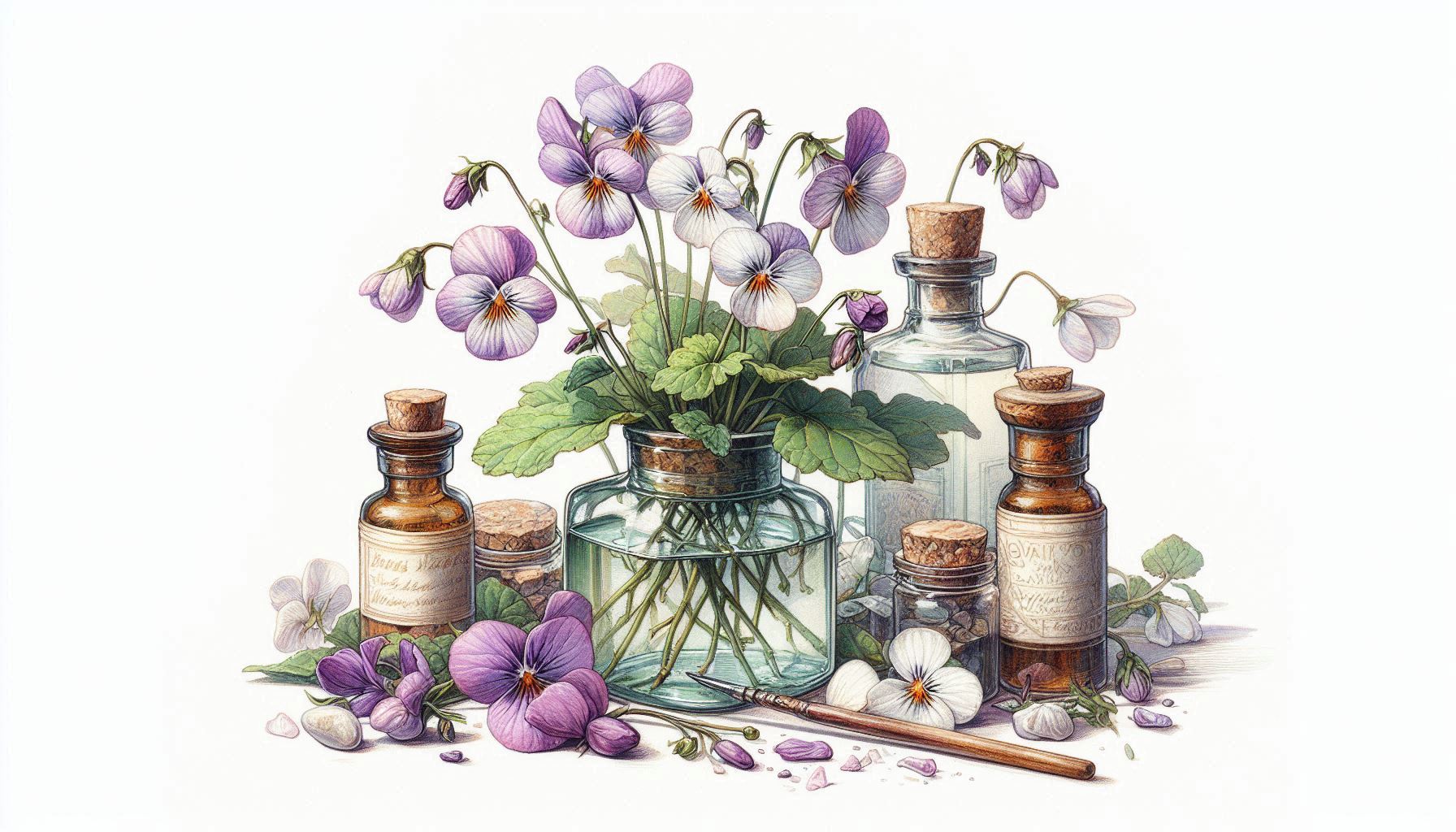
Violet, scientifically known as Viola odorata and a member of the Violaceae family, is a revered herb celebrated for its gentle yet profound ability to soothe inflammation, clear respiratory congestion, and promote skin and lymphatic health. Known by evocative common names such as Sweet-Scented Violet, Banaf Shah, Fialka Polevaya, Virgin’s Bower, and Traveller’s Joy, its Latin name Viola derives from the Greek Ione (linked to Jupiter’s myth) or Vias (wayside), reflecting its ubiquitous beauty along paths. This low-growing perennial, prized for its fragrant flowers, leaves, and rhizome, is rich in saponins, salicylic acid, and viola-quercitin, offering antiseptic, expectorant, and demulcent properties. Used for centuries in ancient Greek, Celtic, Iranian, and colonial traditions, Violet is a cornerstone of herbal medicine for coughs, skin irritations, and tumors. In this comprehensive article, we’ll explore the multifaceted benefits of Violet, its bioactive and nutritional profile, and how to safely incorporate it into your wellness routine, with notes on its safe, non-toxic profile.

A Fragrant Blossom of Comfort and Renewal
Violet is a delicate, heart-shaped plant that carpets woodlands and gardens across Europe, Asia, and North America, its deep purple or white flowers exuding a sweet, nostalgic scent. Its common names weave a tapestry of poetry and history: Sweet-Scented Violet and Banaf Shah evoke its perfumed allure, while Virgin’s Bower and Traveller’s Joy celebrate its charm along waysides. Ancient poets like Homer and Virgil praised Violet in epic verses, and Pliny noted its use in wines and perfumes. Celtic bards sang of its healing powers, and Anglo-Saxon herbalists used it for wounds. In Napoleonic France, it became an emblem of loyalty. Colonial Native Americans applied bruised Violet leaves as poultices for boils, while European herbalists used flower infusions as a litmus substitute, detecting acid or alkali reactions.
Violet’s medicinal legacy centers on its ability to dissolve accumulations, soothe mucous membranes, and cool inflammation, making it a go-to remedy for conditions from whooping cough to swollen glands. Its versatility extends to culinary and cosmetic uses, with flowers candied for desserts or infused into perfumes. Today, Violet is valued for its anti-inflammatory, anti-tumour, and skin tonic properties, offering relief from fevers, insomnia, and eczema. Modern research highlights its antimicrobial and antioxidant effects, supporting its use in respiratory and lymphatic disorders. With no reported toxicity, Violet is safe for children and sensitive individuals, though large doses of the rhizome may induce vomiting. When used as an infusion, poultice, or syrup, Violet embodies a fragrant blend of comfort, purification, and renewal, inviting us to harness its poetic wisdom for circulatory, digestive, and lymphatic wellness.

Body Systems and Organs Supported
Violet’s therapeutic reach spans multiple body systems, making it a holistic ally for circulatory, digestive, lymphatic, and urinary health. It supports:
- Circulatory: Purifies blood and lowers blood pressure, aiding systemic balance.
- Digestive: Relieves bloating, ulcers, and constipation, promoting gut health.
- Lymphatic: Dissolves swollen glands and tumors, supporting detoxification.
- Urinary: Promotes urine flow, flushing toxins and aiding kidney function.
Violet influences key organs, including the stomach and intestines, while its actions target skin and muscle tissues, making it an ideal remedy for respiratory infections, skin conditions, and lymphatic congestion.

The Bioactive and Medicinal Power of Violet
Violet’s therapeutic potency stems from its rich array of bioactive compounds, including:
- Saponins: Provide expectorant and anti-inflammatory effects, aiding respiratory and lymphatic clearance.
- Salicylic Acid: Offers pain relief and anti-inflammatory benefits, soothing skin and muscles.
- Glucoside Viola-Quercitin: A flavonoid with antioxidant and anti-tumour properties, supporting cellular health.
- Alkaloid Odoratine: Contributes to nervine and sedative effects, promoting relaxation.
- Aromatic Compound Irone: Gives flowers their sweet scent, enhancing expectorant action.
- Blue Pigment: Adds antioxidant properties, protecting against oxidative stress.
Compounds that drive Violet’s extensive medicinal actions:
- Alterative: Detoxifies blood and lymph, addressing chronic conditions like jaundice and swollen glands.
- Antiseptic and Antimicrobial: Combats infections in the respiratory tract, skin, and urinary system.
- Anti-inflammatory: Reduces inflammation in lungs, skin, and muscles, easing pleurisy and eczema.
- Antispasmodic: Relieves spasms in the digestive and respiratory systems, aiding bloating and coughs.
- Anti-pyretic: Lowers fevers, cooling the body during infections.
- Anti-tumour: Dissolves hard lumps and malignant growths, supporting cancer care (preliminary research).
- Demulcent: Soothes inflamed mucous membranes in the throat, lungs, and stomach.
- Diaphoretic: Promotes sweating, aiding fever resolution and detoxification.
- Diuretic: Increases urine flow, flushing toxins and supporting kidney health.
- Emollient: Softens and hydrates skin, healing irritations and wounds.
- Expectorant (Flowers): Clears mucus from lungs, relieving bronchitis, whooping cough, and hoarseness.
- Laxative: Promotes bowel movements, easing constipation and bloating.
- Skin Tonic: Enhances complexion, heals acne, and soothes sensitive skin.
- Nervine: Calms nervous tension, aiding insomnia and stress-related disorders.
- Emetic and Purgative (Stems, Rhizome): Induces vomiting or bowel movements in large doses, used cautiously.
These actions make Violet a versatile remedy for respiratory infections, skin disorders, and lymphatic issues, with a gentle, cooling profile ideal for children and sensitive individuals.

Nutritional Profile
Violet provides a valuable array of nutrients that enhance its tonic and healing properties:
- Vitamins:
- Vitamin A: Supports skin, vision, and immunity, aiding wound healing.
- Vitamin C: Boosts immunity and acts as an antioxidant, reducing inflammation.
Its nutrient profile, combined with its saponins and flavonoids, supports Violet’s role as an antiseptic, demulcent, and skin tonic herb, nourishing the body during illness or stress.

Traditional and Modern Applications
Violet has been a staple in Greek, Celtic, Iranian, and colonial herbalism, with applications divided into internal and external uses:
Internal Applications
- Respiratory Health: Violet’s expectorant, anti-pyretic, and demulcent properties make it a premier remedy for colds, sore throats, lung inflammation, hoarseness, whooping cough, and bronchitis. It clears mucus, soothes irritated airways, and reduces fevers, making it excellent for children. A cold infusion (1–2 fluid oz, 1–5 parts water, drunk 3 times daily) or syrup (1 tsp as needed) is ideal for these conditions.
- Lymphatic and Circulatory Health: Its alterative and anti-tumour actions dissolve swollen glands, tumors, and malignant growths, purify blood, and lower blood pressure. It treats ague, epilepsy, and jaundice by supporting lymphatic and liver detoxification.
- Digestive Health: Its laxative, antispasmodic, and demulcent properties relieve bloating, gas, ulcers, and constipation caused by morbid accumulations, soothing the stomach and intestines.
- Nervous System Support: Its nervine action eases insomnia, nervous disorders, and stress, promoting relaxation and restful sleep.
- Women’s Health: Its anti-inflammatory and emollient properties address swollen breasts, prolapse, and nervous disorders linked to hormonal changes, supporting female wellness.
- Urinary Support: Its diuretic action flushes toxins, aiding kidney function and mild edema.
External Applications
- Skin and Musculoskeletal Healing: Violet poultices, compresses, oils, or ointments treat bruises, boils, abscesses, eczema, pimples, swollen glands, and breast inflammation, leveraging its emollient, antiseptic, and vulnerary properties. A cooling plaster on the neck relieves headaches, while hot fomentations address tongue cancer or toothache.
- Respiratory and Pain Relief: An olive oil-Violet mixture (steeped 6 hours) applied to the throat soothes hoarseness, while poultices ease ear problems, neuralgia, and rheumatism.
- Wound and Infection Care: An infusion wash or syrup rubbed locally heals wounds, prevents infection, and reduces swelling.
- Digestive and Lymphatic Support: Enema injections of infusion relieve constipation or lymphatic congestion, while baths promote systemic detoxification.

Dosage and Preparation
Violet can be prepared as an infusion, powder, syrup, poultice, ointment, compress, wash, enema, or bath, with dosages tailored to the condition:
- Infusion: Steep 1–2 tsp flowers/leaves in 1 cup cold water (1–5 parts water), drink 1–2 fluid oz, 3 times daily, for respiratory, lymphatic, or digestive issues; drink cold to preserve delicate compounds.
- Powder: 3–9 g (or 1 tsp in 1 cup water), 1–3 times daily, for systemic benefits or as a mild emetic (40–50 grains for stronger emetic effect, used cautiously).
- Syrup: 1 tsp as needed for coughs, hoarseness, or topical wound healing.
- Poultice/Compress: Crush fresh leaves/flowers or steep dried herb in hot water, apply to bruises, boils, or swollen glands for 20–30 minutes.
- Ointment: Infuse leaves/flowers in olive oil (steep 6 hours), blend with beeswax, and apply to eczema, pimples, or breast inflammation.
- Wash/Enema: Steep 1 tbsp herb in 1 pint water, cool, and use for wounds, gum disease, or constipation.
- Bath: Add 2–4 cups strong infusion (e.g., 2 oz herb in 1 quart water) to bathwater for detoxification or skin soothing.
Important: Use small doses for emetic or purgative effects (rhizome/stems) to avoid discomfort. Source organic Violet to avoid pesticide residues, and ensure sustainable harvesting, as wild populations may be overharvested. Store in a cool, dry place to maintain potency.

Cautions and Contraindications
Violet is remarkably safe with no reported toxicity or side effects, making it suitable for children, pregnant women, and sensitive individuals. However, caution is advised in specific cases:
- Large Doses (Rhizome/Stems): May cause vomiting or purging due to emetic and purgative properties; start with low doses (e.g., 1 tsp infusion).
- Drug Interactions: May enhance anti-inflammatories, sedatives, or diuretics due to its nervine and diuretic effects; monitor closely.
- Allergies: Rare allergic reactions possible, particularly in those sensitive to Violaceae plants; test in small doses.
- Medical Conditions: Safe for most, but consult a provider for severe respiratory or lymphatic disorders to ensure compatibility with other treatments.

Synergistic Combinations and Substitutions
Violet works well in formulas, pairing with complementary herbs to enhance its respiratory, lymphatic, and skin-healing effects:
- With Honey: Treats chronic coughs and asthma, combining expectorant and soothing properties.
- With Olive Oil: Creates a throat-soothing mixture or skin-healing ointment, amplifying emollient effects.
- With Linseed: Forms a poultice for boils, abscesses, or swollen glands, enhancing anti-inflammatory and vulnerary action.
- With Marshmallow Root: Soothes respiratory and digestive mucous membranes, balancing demulcent effects.
For substitutions:
- Heartsease (Viola tricolor): Offers similar skin tonic, expectorant, and anti-inflammatory properties but is less emetic.
- Marshmallow: Matches demulcent and soothing effects but lacks Violet’s anti-tumour or diuretic potency.
- Cleavers: Supports lymphatic and urinary health but is less focused on respiratory or skin benefits.

Cultural and Historical Significance
Violet’s history spans over 2,000 years, rooted in Greek, Celtic, and Persian traditions. In ancient Greece, it was linked to Io’s myth and used in perfumes and wines. Celtic poems celebrated its beauty, and Anglo-Saxon herbalists applied it for wounds. In Iranian medicine, it was a staple for respiratory and skin conditions, while colonial Native Americans used it for boils and swellings. During the Napoleonic era, Violet became a symbol of devotion, worn by supporters. Its litmus-like flower infusion fascinated European chemists, detecting pH changes.
In folklore, Violet symbolized modesty, love, and healing, often tucked into bouquets or used in love charms. Its modern use in cough syrups, skin salves, and lymphatic tonics reflects its enduring reputation, with research exploring its anti-tumour and antimicrobial effects. Sustainable cultivation is key, as demand for cosmetic and medicinal uses strains wild populations. Its legacy as a sweet-scented healer endures, reflected in its use for respiratory health, skin care, and lymphatic support.

Violet (Viola odorata) is the Sweet-Scented Healer of skin, lungs, and lymph, blending gentle purification with profound restorative power. From clearing coughs and soothing eczema to dissolving tumors and easing fevers, this fragrant herb offers a holistic path to wellness. Its bioactive compounds, including saponins and salicylic acid, deliver expectorant, anti-inflammatory, and skin tonic benefits, making it a cornerstone remedy for circulatory, digestive, and lymphatic health.
Whether sipped as a cooling infusion, applied as a soothing poultice, or candied as a sweet remedy, Violet invites us to embrace its nurturing energy with mindfulness in large doses. Its remarkable safety profile makes it accessible to all, though sustainable sourcing is essential. By incorporating Violet into your routine under the guidance of a healthcare professional, you can unlock its potential to cleanse, heal, and uplift. Let this Banaf Shah inspire you to explore the timeless wisdom of herbal medicine, connecting you to a legacy of beauty and renewal.


Leave a Reply