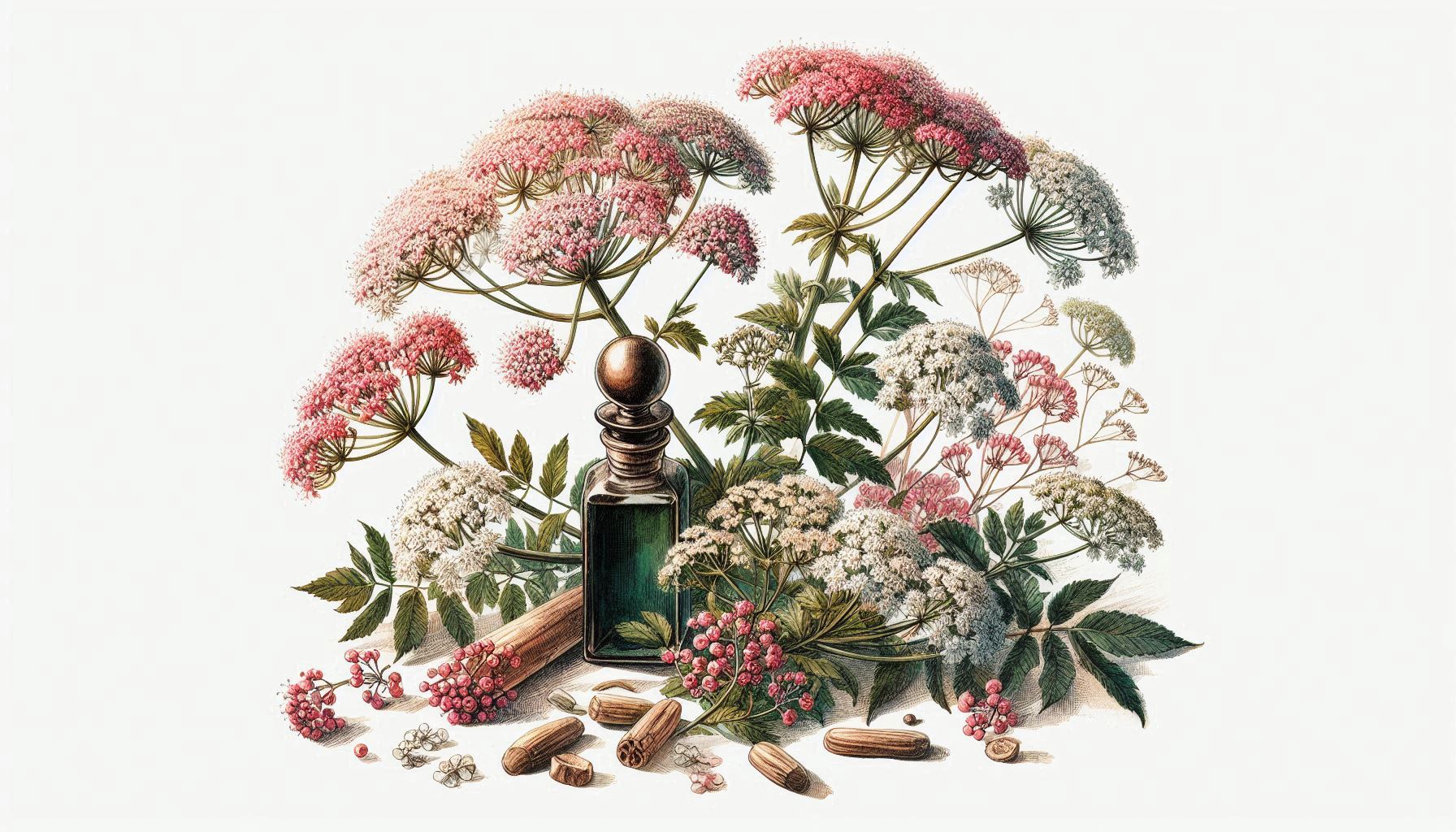
Valerian, known scientifically as Valeriana officinalis, is a remarkable plant with a long history of use in herbal medicine. A member of the Valerianaceae family, this herb grows wild across Europe and parts of Asia and has been naturalized in North America. Its name comes from the Latin word valere, meaning “to be in health” or “to be strong,” possibly hinting at its robust healing properties or its distinct, earthy smell. Valerian goes by many names—like All Heal, Amantilla, Setwall, Great Wild Valerian, Heliotrope, and Vandal Root—and has been celebrated for centuries as a natural remedy for stress, sleep troubles, and more. In this article, we’ll explore what makes Valerian so special, how it works in the body, its many uses, and some key cautions to keep in mind.

What Is Valerian?
Valerian is a tall, flowering perennial that can reach up to five feet in height. Its clusters of small, pinkish-white flowers bloom in the summer, but it’s the underground parts—the root and rhizome (a type of underground stem)—that hold its medicinal power. These parts give off a strong, musky odor that some liken to old socks or wet earth, a scent that’s been both praised and criticized throughout history. Cats, interestingly, are drawn to it much like they are to catnip!
Valerian’s use dates back to ancient Greece and Rome, where it was called “phu” or “nard” and used by healers like Hippocrates. In medieval Europe, it earned nicknames like “Herba Benedicta” (blessed herb) for its soothing effects. Today, it’s one of the most popular herbal remedies worldwide, especially for promoting relaxation and sleep.

Parts Used and Key Components
The magic of Valerian lies in its roots and rhizomes, which are harvested, dried, and turned into teas, tinctures, powders, or essential oils. These parts are packed with active compounds that drive its effects, including:
- Volatile essential oil: Makes up about a third of Valerian’s activity and contributes to its signature smell.
- Valerenic acid: A sesquiterpene with calming, anxiety-reducing (anxiolytic) properties.
- Iridoids and valepotriates: Compounds that support its sedative and nervine effects.
- Isovaleric acid: The source of its pungent odor.
- Minerals: Magnesium, potassium, copper, zinc, and trace amounts of lead.
One standout feature of Valerian is its high levels of gamma-aminobutyric acid (GABA), a neurotransmitter that helps calm the brain and nervous system. This makes it a natural ally for anyone dealing with stress or sleeplessness.

Body Systems and Organs Affected
Valerian primarily works its wonders on two key systems:
- Nervous System: Calms nerves, reduces anxiety, and promotes restful sleep.
- Digestive System: Soothes the stomach and intestines, easing discomfort.
It also influences specific organs and tissues:
- Organs: Digestive tract and liver.
- Tissues: Nerves.
This targeted action explains why Valerian is so effective for both mental and physical relaxation.

How Does Valerian Work? Understanding Its Actions
Valerian is like a Swiss Army knife of herbs—it has a wide range of effects, or “actions,” depending on how it’s used. Here’s what it can do:
- Anodyne: Relieves pain, making it helpful for headaches or cramps.
- Anthelmintic: Expels intestinal worms, supporting gut health.
- Antispasmodic: Eases muscle spasms and cramps, from menstrual pain to digestive issues.
- Anti-inflammatory: Reduces inflammation in the body.
- Aromatic: Its scent aids digestion and relaxation.
- Carminative: Relieves gas and bloating in the stomach.
- Cathartic: Promotes bowel movements for a healthy digestive system.
- Diaphoretic: Induces sweating to help detoxify the body.
- Diuretic: Increases urine production, flushing out excess fluids.
- Nervine: Strengthens and calms the nervous system.
- Sedative: Promotes relaxation and sleep.
- Stimulant: In small doses, it can boost mental focus and energy.
- Tonic: Supports overall vitality and well-being.
Valerian’s ability to slow the heart rate while increasing its strength is especially useful for palpitations, while its influence on GABA levels helps balance the nervous system, reduce anxiety, and create a buffer against stress.

Health Benefits and Applications
Valerian is best known as a sleep aid, but its benefits go far beyond that. Here’s how it can help:
Internal Uses
- Sleep and Relaxation: Valerian is a go-to for insomnia, restlessness, and excitability. It calms the brain and higher nerve centers, making it useful for conditions like St. Vitus Dance (a nervous disorder) or neuralgia.
- Stress Relief: As a daytime sedative, it eases tension, trembling, and overthinking-related headaches.
- Heart Health: A warm infusion with cayenne can soothe heart palpitations by regulating the heartbeat.
- Digestive Support: It heals stomach ulcers, prevents fermentation (which causes gas), and boosts digestive secretions. It’s especially great for kids with bloating or poor appetite—give it 30 minutes before meals.
- Pain and Spasms: Relieves cramps (including menstrual ones), muscle pain, and general discomfort.
- Women’s Health: A hot infusion can promote menstruation if it’s delayed.
External Uses
- Essential Oil: Mix 10–20 drops with a carrier oil (like almond or coconut oil) in a 30 ml bottle. Massage onto the chest, neck, or temples to ease tension and promote calm.

How to Use Valerian: Dosage Guidelines
Valerian can be prepared in several ways, and the right dose depends on your needs. Here’s a simple guide:
- Tincture: 2–4 ml (about a teaspoon), 3 times a day, diluted in water.
- Infusion (Tea): Steep 1–2 teaspoons of dried root in 1 cup of boiling water for 15 minutes. Drink as needed for stress or before bed for sleep.
- Powder: Take 2 “00” capsules (about 3–9 grams total) 3 times a day, or mix 1 teaspoon into hot water, steep for 10 minutes, and sip.
- Essential Oil: Use as a massage blend (see above).
Start small to see how your body reacts, and adjust as needed. For sleep, take it 30–60 minutes before bedtime.

Combining Valerian with Other Herbs
Valerian pairs beautifully with other herbs to boost its effects:
- Valerian + Cayenne: A warm infusion helps with heart palpitations.
- Valerian + Cramp Bark: Eases menstrual or muscle cramps.
- Valerian + Hops, Passion Flower, and Skullcap: A classic blend for sleep and relaxation, enhancing its sedative power.
These combinations make Valerian even more versatile for tackling specific issues.

Substitutions and Alternatives
If Valerian isn’t an option, try these:
- Lobelia and Golden Seal: For similar calming effects.
- Motherwort: A relaxing nervine for heart-related symptoms.
- Hops and Skullcap: Sedatives for sleep, especially if Valerian’s diuretic effect is a concern.

Cautions and Contraindications
Valerian is generally safe, but there are some things to watch out for:
- Overuse: Taking large doses too often can lead to headaches, heaviness, stupor, insomnia, or heart issues.
- Diuretic Effect: It may cause nighttime urination, so it’s not ideal as a sleep aid for everyone.
- Very High Doses: Rare, but extreme amounts could slow the heartbeat or cause paralysis—treatable with a stomach cleanse, charcoal, or sodium sulfate.
- No Acute Toxicity: It’s not poisonous in typical doses, making it a safe choice when used wisely.
If you’re pregnant, nursing, or on medications (especially sedatives), check with a doctor first.

Why Valerian Matters
Valerian is a gift from nature—a gentle yet powerful herb that’s been helping people unwind for centuries. Its ability to boost GABA levels, calm the nervous system, and ease physical discomfort makes it a standout remedy for modern stressors like anxiety, insomnia, and muscle tension. Whether you’re sipping a warm tea before bed or massaging its oil into your skin, Valerian offers a natural way to find peace and balance.
By using it thoughtfully and respecting its limits, you can unlock the full potential of this ancient healer. Next time you hear about Setwall or All Heal, you’ll know why it’s earned its place in the herbal hall of fame!



Leave a Reply