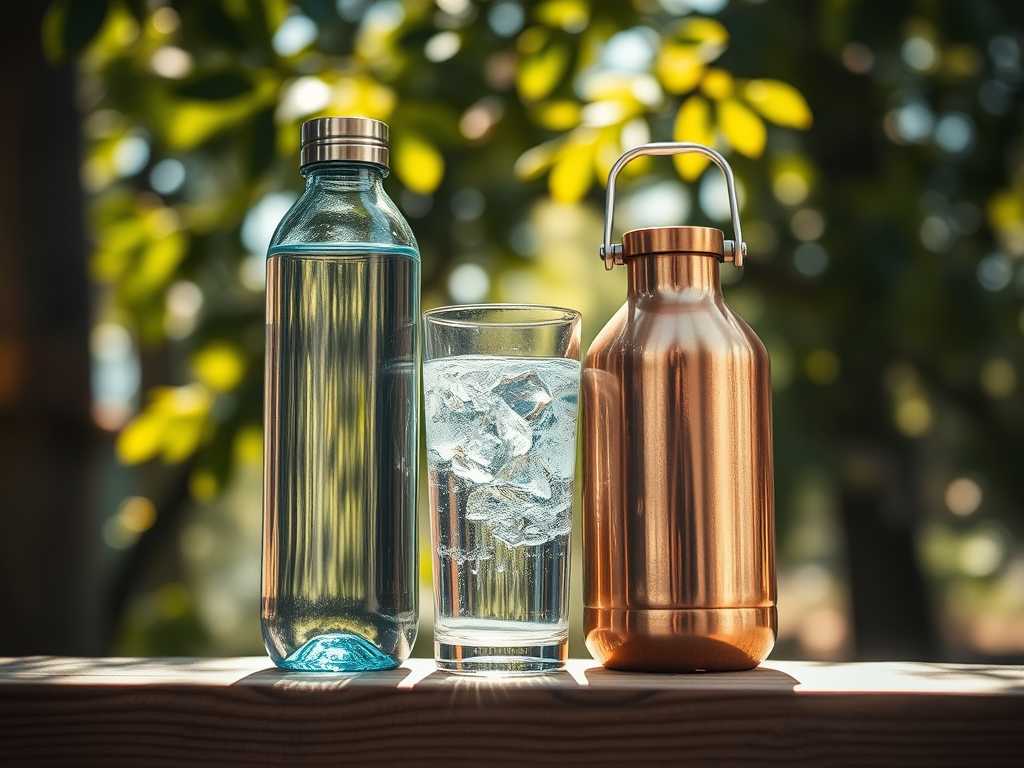
Water is life—we all know that. But what if the way you’re drinking it is quietly undermining your health? If you’re still chugging from plastic bottles, especially ones that’ve been baking in a hot car before your hike or gym session, it’s time to rethink your hydration game. Plastic isn’t just a convenience—it’s a risk, leaching chemicals into your water that your body doesn’t need. Instead, imagine sipping from a sleek glass bottle or a sturdy copper vessel—clean, safe, and even a little magical. Worried glass might shatter with your rough-and-tumble life or your kids’ chaos? Copper’s got your back. Let’s dive into why plastic’s a no-go, how glass and copper shine, and even why some glass bottles come with crystals to boost your water’s vibe.
Here’s the scoop on ditching plastic for good—and why it’s a game-changer for your health and the planet.
1. The Plastic Problem: Leaching Chemicals into Your Water
Picture this: you toss a plastic water bottle into your car, head to the gym or a hike, and it sits there in the summer heat for hours. By the time you crack it open, it’s not just water you’re drinking—it’s water with a side of chemicals. Plastic bottles, especially those made from polyethylene terephthalate (PET) or polycarbonate, can leach nasty stuff like BPA (bisphenol A), phthalates, and antimony into your drink. Heat—like a hot car or even a sunny day—speeds up this process, turning your bottle into a chemical stew.
- BPA and Phthalates: These are endocrine disruptors—fancy talk for “they mess with your hormones.” Studies link them to issues like fertility problems, weight gain, and even increased risk of certain cancers. Even “BPA-free” plastics can leach other sneaky substitutes that aren’t much better.
- Antimony: A toxic metal that seeps out over time, especially in heat. It’s not something you want sipping alongside your H2O—think nausea, fatigue, or worse with long-term exposure.
- Microplastics: Tiny plastic bits break off and end up in your gut. Research is still unfolding, but early signs suggest they’re not doing your body any favors.
That bottle you left in the car before your hike? It’s a ticking time bomb of leaching. Why risk it when cleaner options like glass and copper exist?
2. Glass: The Pure, Simple Choice
Switching to glass water bottles is like hitting the reset button on your hydration—it’s pure, neutral, and doesn’t mess with your water’s taste or quality. Glass doesn’t leach anything—no chemicals, no metals, just water as nature intended. It’s the gold standard for clean drinking, and it’s eco-friendly too—recyclable and free of the plastic waste choking our planet.
- Why It’s Great: Glass is inert, meaning it won’t react with your water or the environment. Whether it’s sitting in a hot car or chilling in your fridge, your water stays pristine. Plus, it’s easy to clean—no funky smells or stains like plastic picks up over time.
- The Breakage Worry: Okay, fair point—glass can break. If you’re hiking rugged trails, juggling a busy life, or have kids who treat everything like a football, you might hesitate. But modern glass bottles often come with silicone sleeves for grip and protection—tougher than they look! Still nervous? Copper’s your next hero.
Glass keeps it simple and safe—your water stays clean, no matter where life takes you.
3. Copper: The Tough, Health-Boosting Alternative
If glass feels too fragile for your rough-and-tumble world, copper water vessels are your new best friend. Used for centuries in Ayurveda (India’s ancient healing system), copper isn’t just durable—it’s a powerhouse that actually improves your water quality. Toss it in your gym bag, let your kids bang it around, or take it on a hike—it’s tough as nails and adds a wellness boost plastic could never dream of.
- How Copper Improves Water:
- Natural Antibacterial: Copper ions kill bacteria, viruses, and fungi in your water—think E. coli or mold that might creep in over time. Studies show copper surfaces zap germs fast, making your water safer with every sip.
- Alkalizes Water: Copper slightly raises water’s pH, making it less acidic. Ayurveda says this balances your body’s pH, aiding digestion and reducing inflammation—small but mighty perks.
- Boosts Immunity: Trace amounts of copper leach into the water (in safe, tiny doses), supporting your immune system, brain function, and even collagen production for healthy skin. It’s a mineral your body needs—just not from plastic’s toxic version!
- Taste Upgrade: Copper gives water a crisp, clean taste—subtle but noticeable compared to plastic’s flat or funky aftertaste.
- How to Use It: Fill a copper bottle or jug, let it sit for 6–8 hours (overnight’s perfect), and drink. Don’t overdo it—copper’s benefits max out after a day, so refill daily and clean with lemon juice or vinegar weekly to keep it shiny.
- Why It’s Tough: Copper’s metal durability laughs at drops and dings—perfect for active lives or clumsy hands. No shattering here!
Plastic degrades your water; copper enhances it—durability meets health in one sleek package.
4. Crystal-Infused Glass Bottles: A Magical Twist
Ever seen glass water bottles with crystals inside—like amethyst, rose quartz, or clear quartz—and wondered what’s up? It’s not just pretty decor; it’s a holistic twist on water quality that’s been around for ages, rooted in ancient traditions and modern wellness trends. If you’re already vibing with glass, these take it up a notch.
- How Crystals Change Water:
- Energy Shift: Crystal enthusiasts (and some alternative healers) believe gems infuse water with their “vibrational energy.” Amethyst might calm, rose quartz could inspire love, and clear quartz might amplify clarity—subtle, metaphysical boosts to your hydration.
- Structure Boost: Some claim crystals “structure” water—aligning its molecules for better absorption. Science is skeptical, but fans swear it feels softer or more refreshing. Think of it like nature’s version of a spa day for your water.
- Visual Appeal: Even if you’re not sold on the woo-woo, crystals make drinking water fun and intentional—a little beauty to nudge you toward hydration.
- How They Work: The crystals sit in a chamber or are sealed in the bottle—safe, non-leaching, and easy to clean. Pair them with glass’s purity, and you’ve got a chic, clean combo.
- Why It’s Cool: It’s less about hard science and more about feeling connected to your water. If it gets you sipping more, that’s a win—hydration’s half the battle!
Plastic’s got nothing on this—glass with crystals keeps water pure while adding a dash of personality.
5. Why It Matters: Your Health, Your Planet
Ditching plastic isn’t just about dodging chemicals—it’s about thriving. Every sip from a leaching bottle is a gamble with your hormones, gut, and long-term wellness. Glass and copper? They’re safe bets—pure, durable, and even beneficial. And the planet wins too—plastic bottles pile up in landfills and oceans, while glass recycles endlessly and copper lasts a lifetime.
- Hot Car Warning: That gym or hike bottle baking at 100°F? Plastic leaching skyrockets—studies show BPA levels can jump 55 times higher in heat. Glass and copper don’t flinch—your water stays clean, no matter the temp.
- Kids and Chaos: Copper’s ruggedness handles rough play; glass with sleeves holds up better than you’d think—both beat plastic’s flimsy fate.
Clean hydration aligns with clean eating—whole, natural, and tailored to you. Why taint it with plastic when glass and copper elevate the experience?
How to Make the Switch
Ready to kick plastic to the curb? Here’s your game plan:
- Start with Glass: Grab a sturdy glass bottle (silicone-sleeved if you’re active)—simple, affordable, and pure. Bonus: try a crystal-infused one for fun.
- Go Copper: Pick a copper bottle or jug—look for pure copper, not alloys. Fill it nightly, sip daily, clean weekly—easy health upgrade.
- Ditch Gradually: Replace one plastic habit at a time—car bottle first, then gym, then home. You’ll feel the difference.
- Source Smart: Buy from local makers or eco-friendly brands—support quality, not mass-produced junk.
The Bottom Line
Plastic water bottles are a health hazard waiting to happen—leaching chemicals like BPA, phthalates, and antimony into your water, especially after a hot car stint. Glass keeps it pure and simple, perfect for clean hydration, while copper takes it further—killing germs, alkalizing water, and adding a trace mineral boost, all in a tough-as-nails package. Worried about breakage? Copper’s your rugged fix; glass with sleeves holds up too. And those crystal-infused glass bottles? They’re a fun, vibey twist to make water feel special—because why not?
Stop drinking from plastic and opt for glass or copper—your body and the earth deserve better. Cleaner, safer, and smarter hydration is just a switch away. Sip on that, and thrive.




Leave a Reply