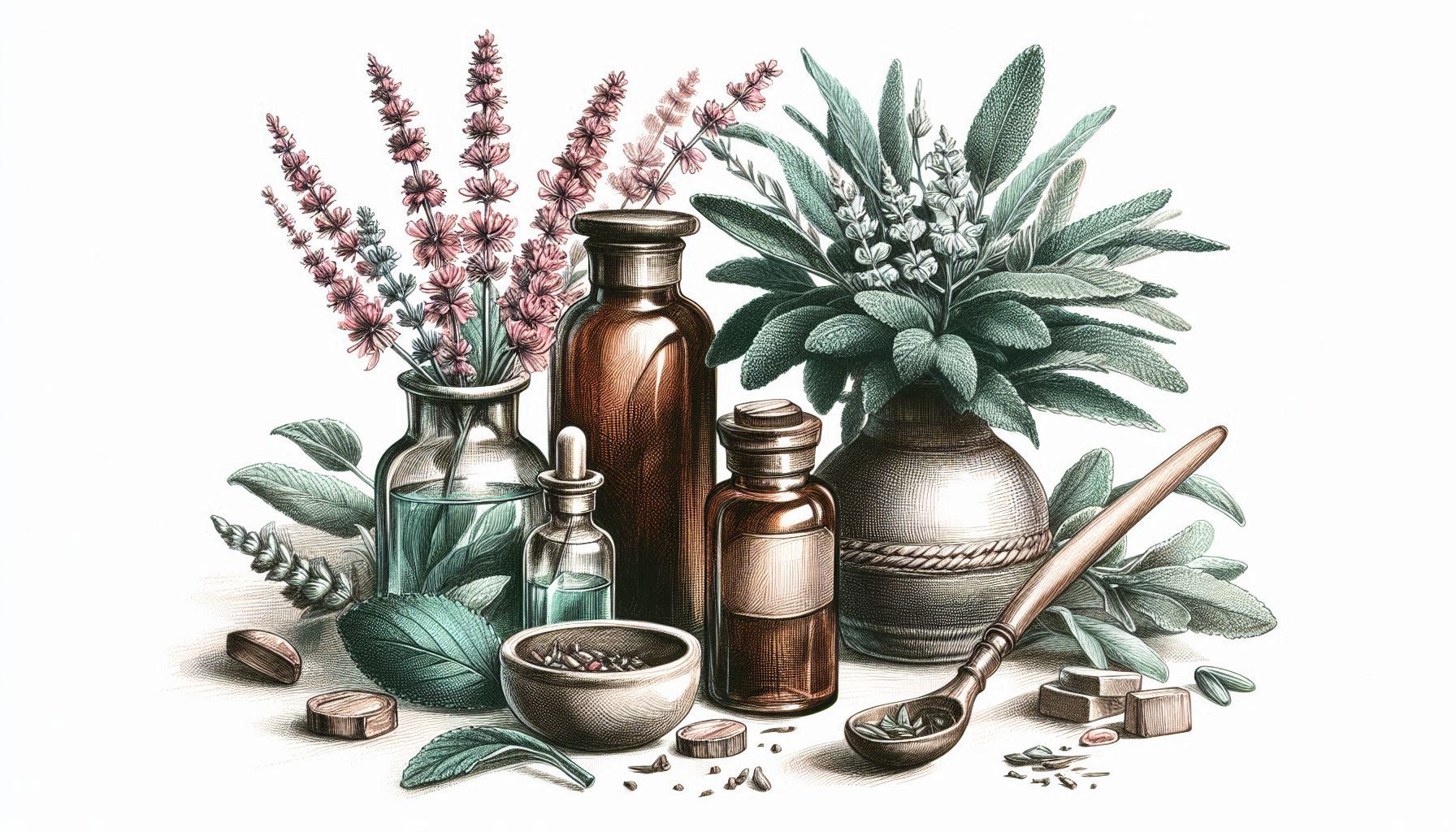
Sage, scientifically known as Salvia officinalis, is a perennial herb from the Lamiaceae family, deeply rooted in both culinary traditions and herbal medicine. Its name reflects its historical reverence:
- Herba Sacra: Dubbed the “sacred herb” by the Romans, highlighting its esteemed status.
- Salvia: Derived from the Latin word “salvare,” meaning “to save” or “salvation.”
- Garden Sage, Red Sage, Meadow Sage, Wild Sage: Common names that reflect its widespread use and varieties.
Sage has been cherished for its medicinal properties since ancient times, offering a broad spectrum of health benefits.

Parts Used:
- Leaves: The primary medicinal component, rich in volatile oils and bioactive compounds, used fresh or dried in various preparations.

Body Systems Benefited:
- Respiratory System: Supports lung health and clears respiratory congestion.
- Digestive System: Enhances digestion and reduces gastrointestinal discomfort.
- Nervous System: Calms nerves and boosts cognitive function.
- Circulatory System: Promotes blood flow and cardiovascular health.
- Reproductive System: Balances hormones and supports menstrual and menopausal health.

Organs and Tissues Impacted:
- Brain: Enhances memory and cognitive function.
- Uterus: Supports reproductive health, particularly during menstruation and menopause.
- Lungs: Aids in respiratory relief.
- Stomach: Stimulates digestion and soothes gastric issues.
- Mucus Membranes: Reduces secretions and inflammation.
- Nerves: Soothes nervous tension.
- Joints: Offers anti-inflammatory support for joint health.

Herbal Actions of Sage:
- Antimicrobial/Antiseptic: Fights bacteria and infections, especially in the mouth and throat.
- Anti-diarrhetic: Regulates bowel movements, aiding in diarrhea relief.
- Alterative: Gently detoxifies and restores balance.
- Anticonvulsant: May reduce seizure activity (with caution due to thujone).
- Anti-galactagogue: Suppresses lactation, useful for weaning.
- Antioxidant: Protects against oxidative stress.
- Anti-spasmodic: Relieves muscle cramps and spasms.
- Antinociceptive: Reduces pain perception.
- Astringent: Tightens tissues, reducing excess secretions.
- Anhydrotic: Reduces sweating when used cold.
- Antitumour: Contains compounds with potential anti-cancer effects.
- Carminative: Expels gas and reduces bloating.
- Cholagogue: Stimulates bile flow for digestion.
- Diaphoretic: Promotes sweating when warm, aiding detoxification.
- Diuretic: Increases urine production for fluid balance.
- Expectorant: Clears mucus from the respiratory tract.
- Hypoglycemic: May lower blood sugar levels.
- Hypolipidemic: Supports healthy cholesterol levels.
- Immunomodulatory: Enhances immune function.
- Nervine: Calms and supports the nervous system.
- Phytoestrogenic: Mimics estrogen, aiding menopausal symptoms.
- Stimulant: Boosts bodily functions.
- Vasodilator: Widens blood vessels, improving circulation.
- Memory-enhancing: Improves cognitive performance.
- Bitter Tonic: Stimulates digestion through its bitterness.

Dosage Recommendations:
- Infusion: 1-2 teaspoons of leaves per cup of water, steeped for 10 minutes, up to three times daily.
- Mouthwash: Boil 2 teaspoons in a pint of water, infuse covered for 10 minutes, gargle 2-3 times daily.
- Tincture: 2-4 ml, taken 2-3 times daily.
- Tea: 1-2 grams in boiling water, steeped for 10 minutes, up to three cups daily.

Cautions and Contraindications:
- Essential Oil: Dilute and use sparingly, as high thujone content can trigger seizures in susceptible individuals.
- Pregnancy: Avoid due to its uterine stimulant properties, which could induce labor.
- Nursing: Can reduce milk supply; avoid unless weaning is intended.
- High Vata: Not recommended in cases of excessive dryness (Ayurvedic term).
- Age Restriction: Not suitable for those under 18 due to potency.
- Tincture Overuse: Excessive doses can lead to thujone toxicity; adhere to recommended amounts.

Health Benefits and Activities:
- Respiratory Relief: Sage soothes sore throats, tonsillitis, and bronchial congestion, acting as an expectorant and antiseptic.
- Digestive Support: Stimulates gastric juices, reduces flatulence, and aids in digestion, making it a go-to for indigestion and bloating.
- Nervous System: Calms anxiety, improves mental clarity, and enhances memory, historically noted for its brain-boosting effects.
- Circulatory Health: Promotes blood flow to the brain and extremities, supporting cardiovascular wellness.
- Reproductive Health: Balances hormones during menopause, eases menstrual cramps, and regulates cycles.

Internal Applications:
- Sweating and Lactation: Cold infusions reduce night sweats and milk production, while warm infusions promote sweating during fevers.
- Women’s Health: Helps with painful periods, menopausal symptoms, and postpartum recovery.
- Digestive and Respiratory: Treats colds, flu, and gas-related issues.
- Oral Health: Used as a mouthwash or gargle for gingivitis, ulcers, and sore throats.

External Applications:
- Wound Healing: Compresses accelerate healing of cuts and sores.
- Rheumatic Pain: Baths soothe joint and muscle aches.
- Insect Bites: Crushed leaves reduce irritation and swelling.

Herbal Combinations:
- Often paired with other herbs like chamomile or peppermint for enhanced digestive or calming effects, though specific combinations depend on the intended use.

Substitutions:
- Salvia Colorata or White Sage (Salvia apiana) can offer similar antiseptic and astringent properties, though they differ in potency and specific actions.

Nutritional Profile:
- Rich in vitamins A, C, and B complex, along with minerals like calcium, potassium, sulphur, silica, phosphorus, and sodium, supporting overall health.

Active Ingredients:
- Contains a volatile oil with thujone (30%), cineol (15%), linalol, borneol, camphor, salvene, and pinene. Additional compounds include diterpenes, phenolic acids (like ursolic acid), tannins, triterpenoids, flavonoids, and phytoestrogenic substances, contributing to its wide-ranging effects.

Sage is a versatile herb with a rich history and a broad spectrum of health benefits, from soothing sore throats to enhancing brain function. Its potent actions require mindful use, particularly avoiding during pregnancy or in excessive doses due to thujone content. Whether enjoyed as a tea, tincture, or external remedy, sage offers a natural approach to supporting respiratory, digestive, and nervous system health. Always consult a healthcare provider before incorporating sage into your regimen, especially if pregnant, nursing, or managing specific conditions. Embrace sage for its sacred heritage and modern-day healing potential.



Leave a Reply