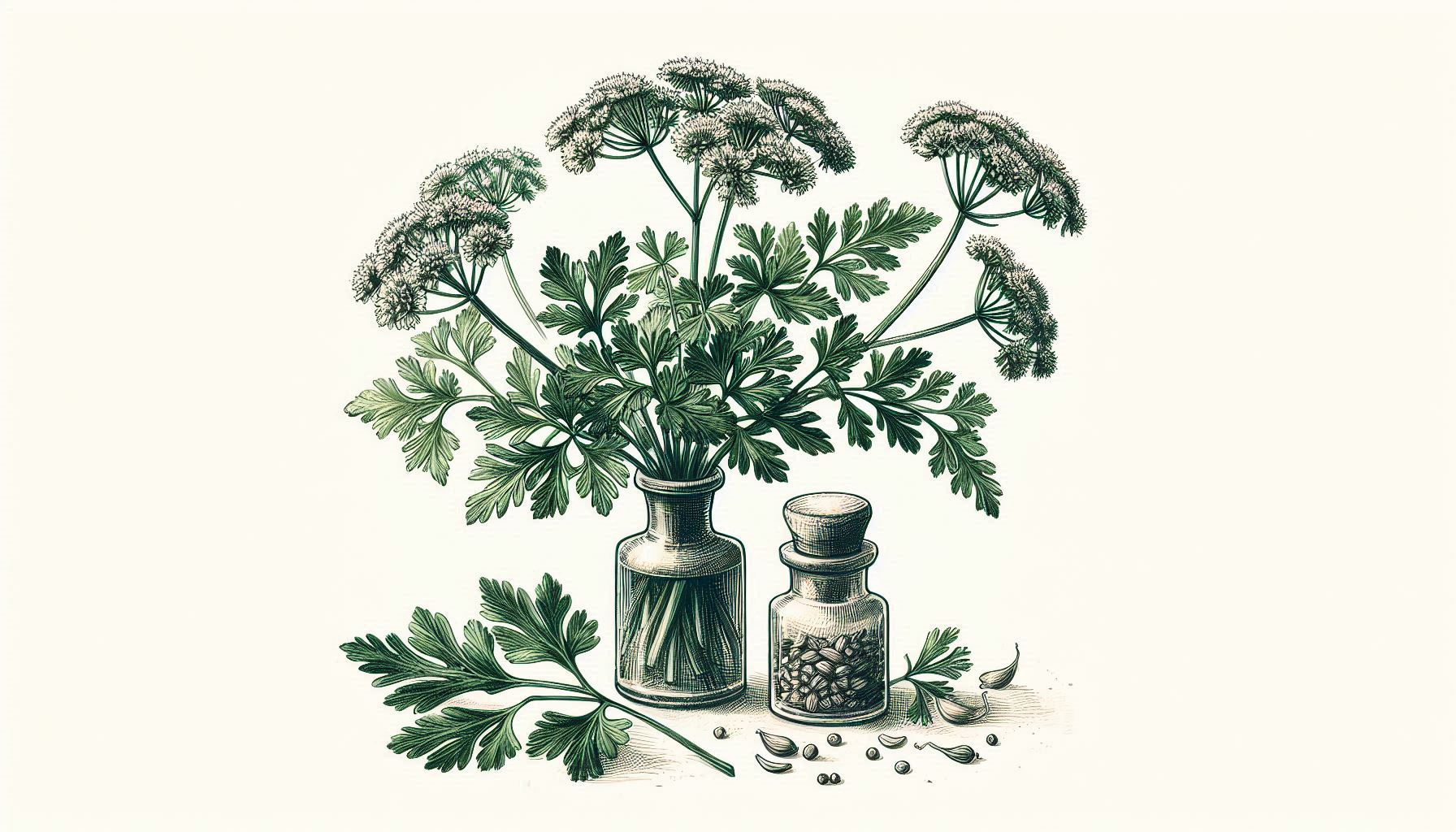
Parsley, scientifically named Petroselinum sativum, is a biennial plant in the Umbelliferae (Apiaceae) family, native to the Mediterranean region but now cultivated worldwide. Also known by:
- Garden Parsley
- Rock Parsley
- Common Parsley

Far beyond its role as a culinary herb, parsley has been valued in traditional medicine for centuries due to its rich nutrient profile and diverse medicinal properties.
Parts Used in Herbal Medicine:
- Leaves: Packed with vitamins and minerals, the leaves are the most commonly used part, providing both nutritional and therapeutic benefits.
- Roots: Less commonly used but equally potent, the roots contain compounds beneficial for liver and kidney health.

Body Systems and Their Benefits:
- Urinary System: Parsley acts as a powerful diuretic, helping to flush toxins from the kidneys, support kidney function, and prevent or treat conditions like kidney stones due to its lithotriptic properties.
- Digestive System: With its aromatic, carminative, and anti-spasmodic properties, parsley aids in digestion, reduces bloating and gas, and can help with conditions like indigestion and irritable bowel syndrome.
- Endocrine System: Parsley supports adrenal health, potentially aiding in stress response due to its high content of vitamins and minerals essential for hormonal balance.
- Immune System: Rich in vitamin C and other antioxidants, parsley boosts the immune system, helping the body fight off infections and support overall health.
Organs Specifically Benefited:
- Liver: Parsley’s detoxifying properties make it beneficial for liver health, helping to clear out toxins and support liver function, particularly with the root.
- Gallbladder: It can assist in dissolving gallstones and easing gallbladder issues thanks to its lithotriptic effects.
- Kidneys: The diuretic action of parsley supports kidney health, aiding in the prevention of kidney stones and infections.
- Adrenals: The herb’s content of B vitamins and minerals like potassium supports adrenal gland function, which is crucial for managing stress and hormone balance.
Tissue Influence:
- Plasma and Blood: Parsley’s high chlorophyll and iron content can enhance blood quality, increase iron levels, and support circulatory health.
- Muscles: The anti-spasmodic nature helps in relaxing muscle tensions, providing relief from cramps and spasms.

Herbal Actions of Parsley:
- Anthelmintic: Parsley has been traditionally used to expel intestinal parasites, aiding in gut health.
- Anti-cancer: Research suggests that certain compounds in parsley might inhibit cancer cell proliferation, particularly due to its antioxidant activity.
- Anti-periodic: Useful in preventing or managing the recurrence of fevers or other periodic conditions.
- Anti-spasmodic: Relieves muscle cramps, making it beneficial for menstrual cramps, digestive spasms, or muscular pain.
- Aperient: Gently promotes bowel movement, supporting digestive health without the harsh effects of stronger laxatives.
- Aromatic: Enhances digestion through its scent and flavor, aiding in the secretion of digestive juices.
- Carminative: Helps in expelling gas, reducing bloating and discomfort.
- Diuretic (Lithotriptic): Increases urine flow, which helps in detoxifying the body and dissolving urinary calculi.
- Emmenagogue: Specifically, the seeds stimulate menstrual flow, making it useful for menstrual irregularities.
- Expectorant: Aids in the removal of mucus from the respiratory tract, beneficial for coughs and bronchial conditions.
- Stimulant: Gently boosts energy levels and bodily functions.
- Tonic: Overall strengthens and invigorates the body, improving resilience.
- Vulnerary: Promotes healing of wounds, both internal and external, due to its high vitamin C content and other healing compounds.

Dosage Guidelines:
- Infusion: One tablespoon of fresh or dried leaves in one cup of boiling water, steeped for 10-15 minutes, can be consumed up to three times daily.
- Tincture: 2-4 ml of a parsley tincture can be taken three times daily, offering a more concentrated form of the herb’s benefits.
- Fresh Parsley: A daily handful of fresh parsley can provide both culinary flavor and health benefits.

Cautions and Contraindications:
- Pregnancy: Due to its emmenagogue properties, parsley should be avoided in large amounts during pregnancy as it might stimulate the uterus.
- Kidney Health: While beneficial for kidney function in moderate amounts, excessive use can lead to kidney irritation or damage.
- General Use: Moderation is advised; a single handful of fresh parsley a day is generally considered safe.

Health Benefits:
- Stone Management: Parsley’s lithotriptic action can help dissolve stones in both the kidneys and gallbladder.
- Adrenal Support: Its nutrient profile supports adrenal health, particularly beneficial under stress.
- Nervous System: Parsley helps in calming and supporting nerve function, potentially due to its rich content of B vitamins.
- Eye Health: The juice from fresh parsley has been used for its anti-inflammatory effects on the eyes.
- Cancer Prevention: Preliminary studies suggest parsley’s compounds could have anti-cancer properties, though more research is needed.
- Immunity and Infection: Parsley’s vitamins and minerals fortify the immune system, making it harder for infections to take hold.
Applications:
- Internally: Digestive disorders, menstrual regulation, fluid retention, and urinary tract issues.
- Externally: Parsley can be used in compresses or baths to reduce inflammation or swelling, particularly beneficial for feet.

Herbal Combinations:
- For bladder infections, combine with Echinacea and Marshmallow Root for a synergistic effect.
- As a nutritive tea, mix with Dandelion, Chicory, and Burdock for a comprehensive health tonic.
Substitutions:
- Cilantro/Coriander: Similar diuretic and detoxifying effects.
- Chervil: Shares many of parsley’s benefits in a milder form.
- Dill: Provides digestive and anti-inflammatory benefits.
- Fennel: Useful for its carminative properties and support for digestion.
- Celery Seed: Offers similar diuretic benefits.

Nutritional Content:
- Parsley is notably high in vitamins A, C, and K, along with B vitamins, iron, potassium, and calcium. Its chlorophyll content aids in blood purification.
Active Ingredients:
- Contains essential oils like apiol and myristicin, which are thought to be responsible for many of its medicinal effects, alongside vitamins, glycosides, and various terpenes.

Parsley is a treasure in both the kitchen and the apothecary, offering a rich tapestry of health benefits from digestion support to cancer prevention. Embrace parsley in your daily life for both its flavor and its healing properties.



Leave a Reply