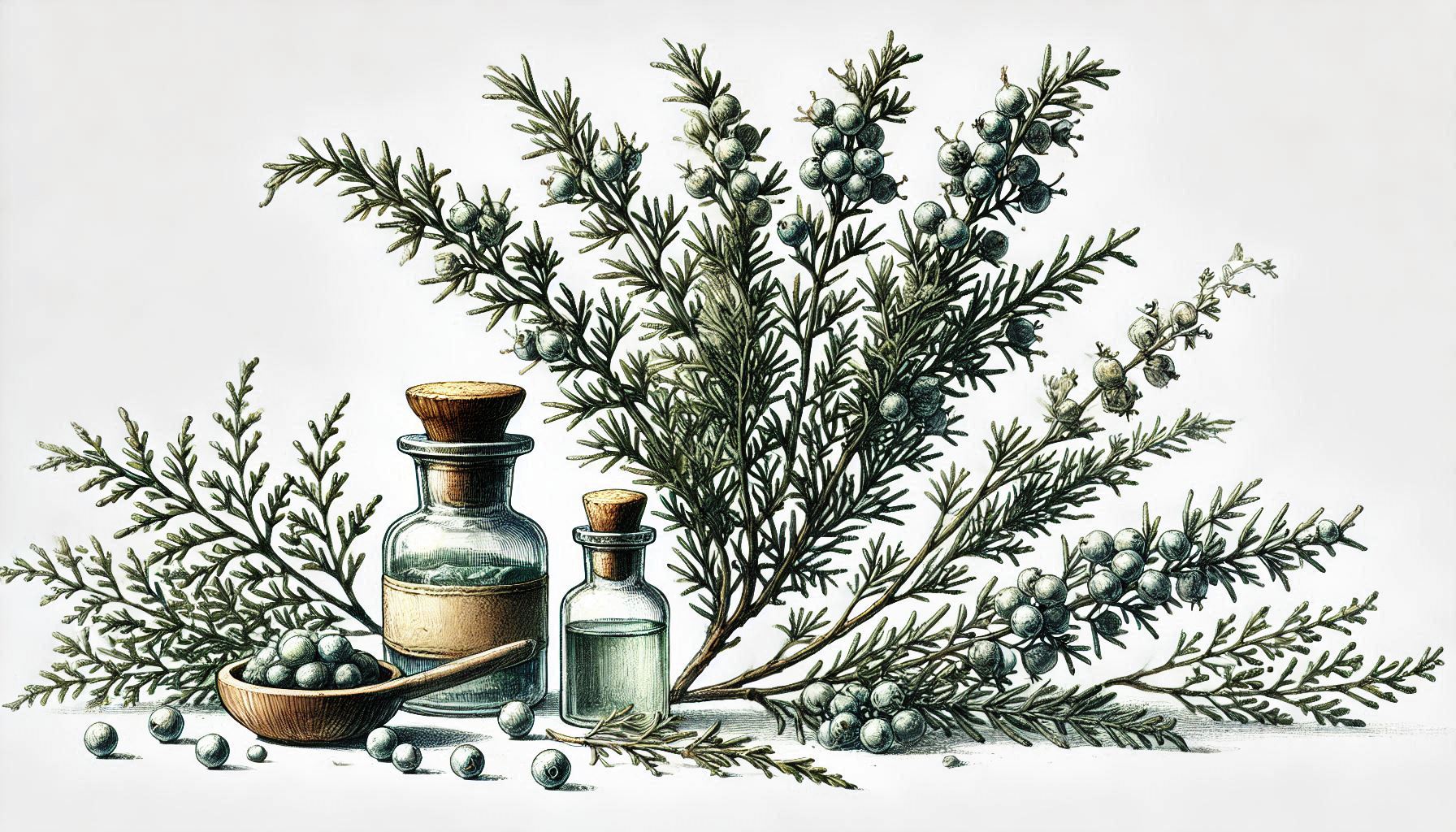
Juniper, scientifically known as Juniperus communis, is a member of the Pinaceae family, renowned for its aromatic berries which give gin its distinctive flavor. Here are its common names:
- Common Juniper
- Gin: Derived from the Dutch word “jenever,” meaning juniper.
This hardy evergreen shrub has been utilized for centuries for both culinary and medicinal purposes.

Parts Used:
- Berries: The most commonly used part, known for their healing properties.
- Needles: Also used, particularly in teas or essential oils.

Body Systems and Organs Benefited: Juniper influences:
- Urinary System: Supports kidney and bladder health, acts as a diuretic.
- Respiratory System: Helps with conditions like bronchitis and cough.
- Nervous System: Can act as a stimulant and aid in cognitive function.
- Digestive System: Assists in digestion, reduces inflammation, and expels gas.
It specifically targets organs like:
- Stomach: Improves digestion and appetite.
- Kidneys and Bladder: Enhances kidney function and treats urinary tract infections.
- Brain: May support memory and cognitive health.
- Lungs: Useful in respiratory complaints.
Tissues:
- Plasma, Blood, Muscle, Fat, Bone, Marrow, Nerves: Juniper’s actions are systemic, supporting various tissues through its diuretic, anti-inflammatory, and nutritive properties.

Herbal Actions by Part:
- Berries:
- Carminative, Urinary Antiseptic, Diuretic: Relieves gas, fights urinary infections, promotes urination.
- Emmenagogue, Sudorific: Regulates menstruation, induces sweating for detoxification.
- Digestive, Anti-inflammatory: Improves digestion, reduces inflammation.
- Fruit (Berries again, as sometimes referred to):
- Antiseptic, Anti-inflammatory, Anti-migraine: Cleanses, reduces inflammation, and might help with headaches.
- Stimulant, Disinfectant, Styptic: Boosts energy, cleanses, and helps stop bleeding.
- Bark:
- Anti-diabetic, Antibacterial, Anti-inflammatory: Manages blood sugar, fights bacteria, reduces inflammation.
- Neuroprotective, Hepatoprotective, Antioxidant: Protects nerves and liver, combats oxidative stress.
- Analgesic, Antimicrobial, Diuretic: Eases pain, fights microbes, promotes urination.

Dosage Recommendations:
- Infusion: 1 teaspoon of crushed berries in boiling water, steep for 20 minutes. Drink morning and night, extend for chronic conditions.
- Fluid Extract: 1/2 to 1 dram.
- Oil of Berries: 1-3 minims (drops).
- Powder: 1 teaspoon, three times daily.
- Tincture: 15 drops after meals.
- Hydrosol: 3 tablespoons in a liter of water daily for kidney health.

Cautions and Contraindications:
- Avoid during pregnancy, acute kidney inflammation, or cystitis.
- Large doses can irritate the kidneys and nervous system, and should not be used alone in sensitive health conditions.

Health Benefits and Activities:
- Digestive Aid: Improves digestion, reduces gas, and combats infections.
- Urinary Health: Stimulates kidney function, treats infections, and aids in removing excess fluids and toxins.
- Pain and Inflammation: Helps with arthritis, gout, and menstrual pain.
- Respiratory Support: Useful for coughs, bronchitis, and improving breathing.
- Cognitive and Nervous System: May enhance memory and reduce stress.

Internal Applications:
- Juniper oil with honey for general health; chewing berries for disease prevention.
External Applications:
- Used in baths for its disinfectant properties, or applied topically for skin conditions, pain relief, and even dental issues. Juniper hydrosol can enhance hair health.

Herbal Combinations:
- Combined with herbs like Blue Cohosh for kidney issues, or with demulcents like Marshmallow to soothe irritation.
Substitutions:
- Garlic and Yarrow can be used for some of juniper’s antibacterial and anti-inflammatory effects.

Nutritional Profile:
- Rich in vitamin C, with trace minerals like sulphur, copper, cobalt, tin, and aluminium.
Active Ingredients:
- Juniper contains a wealth of compounds, including flavonoids, volatile oils, acids, and sugars, which contribute to its medicinal profile.

Juniper is a versatile herb with a broad spectrum of health benefits, from aiding digestion to supporting urinary and respiratory health. Its use should be approached with respect to its potency, especially regarding kidney health. Always consider consulting with a healthcare provider before starting any new herbal regimen, particularly if you have existing health conditions or are on medication. Use juniper wisely to harness its healing powers while ensuring safety.




Leave a Reply