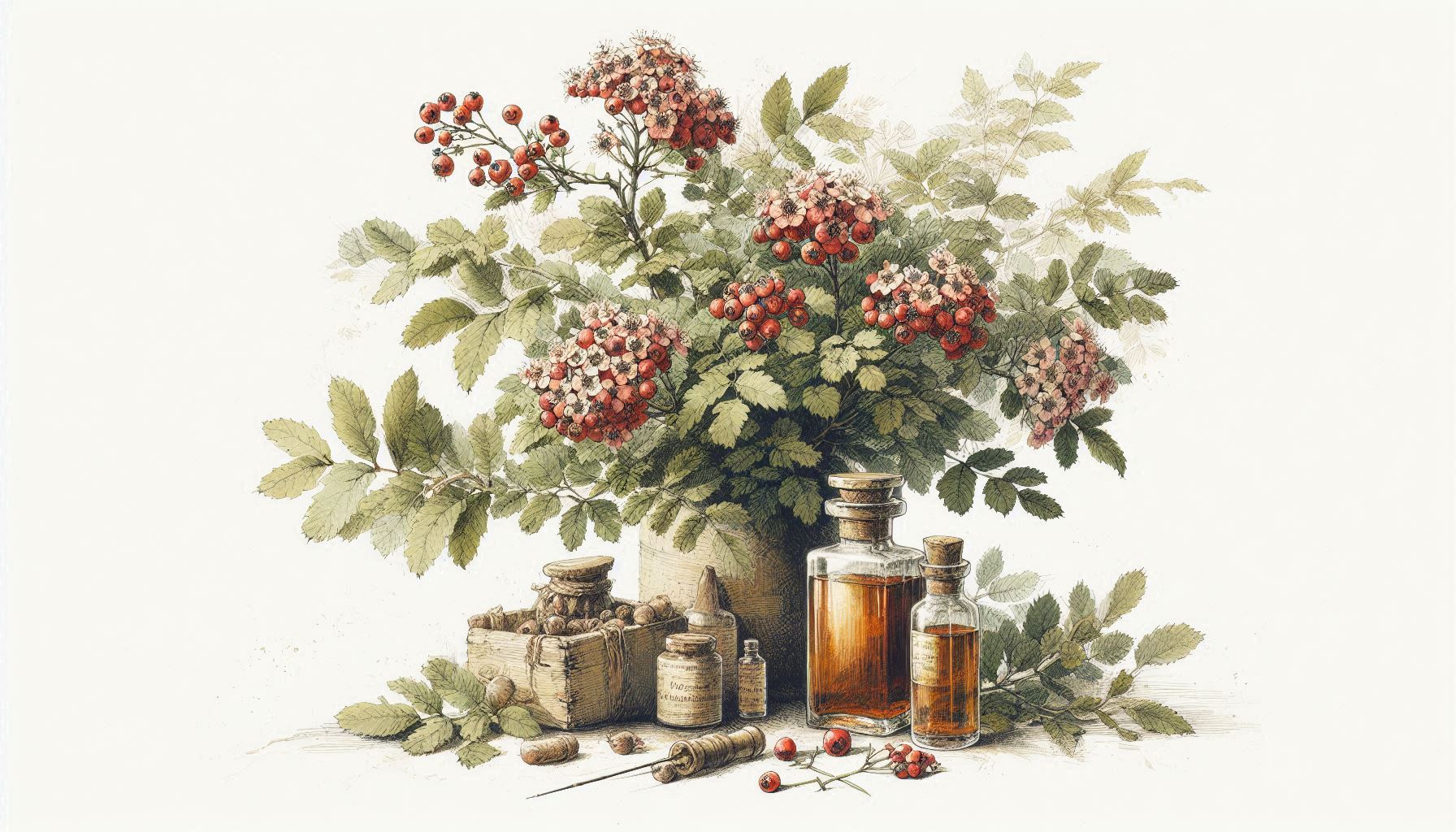
Hawthorn, scientifically known as Crataegus oxyacantha, is a member of the Rosaceae family, cherished for its medicinal properties.
Here are some of its intriguing common names:
- Crataegus: From the Greek ‘Kratos,’ meaning strength, due to the wood’s durability.
- Oxycantha: Signifying ‘sharp thorn,’ highlighting its thorny nature.
- Oxuakantha: Named by Dioscorides and retained by Linnaeus.
- White Thorne, Hawthorn, May-bush, Maytree: Reflecting its appearance and seasonal blooming.
- Noble Thorn: In French, alluding to its historical use in the crown of thorns.

Parts Used in Herbal Medicine:
- Fruit (Haws): Often used in jams, jellies, or medicinally.
- Flowers: Valuable for their therapeutic compounds.
- Leaves: Also utilized, particularly in teas or tinctures.

Body Systems and Organs Benefited: Hawthorn supports:
- Circulatory System: Primarily the heart, aiding in heart health and function.
- Digestive System: Helps with digestion and appetite stimulation.
- Urinary System: Useful for kidney health and conditions like dropsy.
- Reproductive System: Benefits libido, fertility, and menopause symptoms.
- Musculoskeletal System: Supports joint health and reduces inflammation.
- Ocular System: Can be beneficial for eye health.
It specifically targets organs like:
- Heart: Strengthens and regulates heart function.
- Kidneys: Assists in fluid balance and stone dissolution.
- Eyes: Supports eye health with its nutritive properties.
Tissues Influenced:
- Blood: Enhances blood quality and circulation.
- Muscles: Particularly cardiac muscle, improving strength and function.
- Plasma: Helps in maintaining plasma health.

Herbal Actions of Hawthorn:
- Astringent: Tightens tissues, beneficial for reducing bleeding or inflammation.
- Adaptogen: Helps the body resist stress and maintain balance.
- Cardiac-tonic: Specifically strengthens heart function.
- Diuretic: Promotes urine production for detoxification.
- Tonic: General health booster.
- Antioxidant: Fights oxidative stress and inflammation.
- Vasodilator: Improves blood flow by relaxing blood vessels.
- Circulatory Stimulant: Enhances circulation.
- Antibacterial: Protects against bacterial infections.
- Antispasmodic: Relieves muscle spasms.
- Antilithic: Prevents or dissolves kidney stones.
- Nutritive: Provides essential nutrients.
- Nervine: Calms and supports the nervous system.
- Sedative: Promotes relaxation and sleep.
- Hypotensive: Can help lower blood pressure.
- Anxiolytic: Reduces anxiety.
- Rejuvenative: Promotes longevity and vitality.

Dosage Recommendations:
- Powder or Decoction: Typically 6-12 grams daily.

Cautions and Contraindications:
- Hawthorn is generally safe with no known side effects from long-term use, but caution is advised in individuals with ulcers or colitis due to its astringent properties.

Health Benefits and Activities:
- Heart Health: Hawthorn is renowned for its ability to support heart function, particularly in conditions like heart failure, high blood pressure, and arrhythmias.
- Diuretic Effects: Useful for managing fluid retention and supporting kidney health.
- Emotional and Mental Well-being: Its sedative and nervine properties help with anxiety, insomnia, and even conditions like ADHD.
- Reproductive Health: Aids in libido, fertility, and menopausal symptom relief.
- Musculoskeletal Support: Its anti-inflammatory action benefits those with arthritis or similar conditions.

Internal Applications:
- Tea or Decoction: Used for sore throats, digestive issues, and as a general heart tonic. The flowers have been traditionally used for making ‘nephritic water’ for kidney stones.
- Culinary Uses: Hawthorn fruit is versatile in food preparation, from jams to wine, enhancing both flavor and health.
- Digestive Aid: Promotes digestion, appetite, and can alleviate diarrhea when green fruits are used.
External Applications:
- Poultice: Made from crushed leaves or fruit, it’s effective for drawing out splinters, thorns, or treating minor wounds.

Hawthorn is not just a beautiful tree that signals the arrival of spring but a potent ally in herbal medicine, particularly for cardiovascular health. Its gentle yet effective nature makes it suitable for long-term use, supporting not just the heart but overall well-being. Always consider consulting with a healthcare professional before starting any new herbal regimen, especially if you have existing health conditions or are on medication. Embrace Hawthorn for its heart-strengthening, stress-reducing, and vitality-enhancing qualities.



Leave a Reply